MHIET Launches 450kW Gas Cogeneration System with H₂ Co-Firing
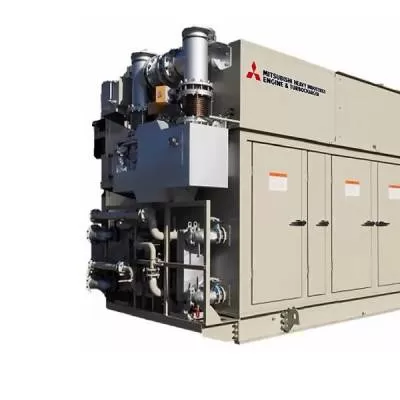
Mitsubishi Heavy Industries Engine & Turbocharger (MHIET), part of the Mitsubishi Heavy Industries Group, has launched a new 450kW gas cogeneration system, the SGP M450, jointly developed with Toho Gas Co.,. The system supports hydrogen co-firing at up to 15 vol per cent, with no loss in performance or reliability.
The system is currently available in the Japanese market, and has been developed from the existing GS6R2 city gas engine platform. Key modifications were made to the fuel gas and engine control systems to enable hydrogen co-firing.
Verified through demonstration testing
Over 500 hours of operational testing were carried out at the Toho Gas Technology Research Institute in Tokai, Aichi Prefecture. The tests simulated real-world operating conditions, verifying the system’s ability to respond to load fluctuations and maintain stable power generation without risk of abnormal combustion. The system delivered consistent output performance, matching that of its city gas-only predecessor.
Flexible dual-mode operation
The SGP M450 can operate in two modes:
City gas 13A mono-firing
Hydrogen co-firing (up to 15 vol per cent)
Mode switching is possible even under load, enhancing operational flexibility. In hydrogen co-firing mode, city gas is used only for engine start-up, ensuring full startup load acceptance — a feature especially valuable for business continuity plans (BCP) during power outages.
Hydrogen-ready package available
To support customers considering a future switch to hydrogen, MHIET is offering a ‘Hydrogen Ready’ package. The system is initially configured for city gas use, with pre-installed components for hydrogen co-firing. This reduces time and cost during future upgrades.
Contribution to carbon neutrality and energy resilience
Cogeneration systems are recognised as effective distributed energy resources, combining energy efficiency and environmental benefits. They also play a key role in disaster resilience by providing backup power in emergencies.
MHIET plans to promote broader use of hydrogen-based systems and the adoption of distributed power solutions, contributing to both carbon neutrality goals and improved infrastructure resilience in the face of climate and energy challenges.