

Schedule a Call Back
Centre Supports States In Ongoing River Clean-Up Efforts
2025-12-03
 The cleaning and rejuvenation of rivers is a continuous process, and the primary responsibility for treating sewage and industrial effluents before discharge rests with State Governments, Union Territories and Urban Local Bodies. The Central Government supplements these efforts through financial and technical support.
River conservation is supported through the Central Sector scheme Namami Gange for rivers in the Ganga basin, and the Centrally Sponsored National River Conservation Plan for other river systems. Additional sewerage infrastructure is being developed under programmes such as the Atal Mission for Rejuvenation and Urban Transformation and the Smart Cities Mission of the Ministry of Housing and Urban Affairs.
Under the Environment (Protection) Act, 1986 and the Water (Prevention and Control of Pollution) Act, 1974, States, UTs, Local Bodies and industrial units must install sewage and effluent treatment facilities and comply with prescribed standards. The Central Pollution Control Board, State Pollution Control Boards and Pollution Control Committees monitor compliance and take punitive action when violations occur. Industries are also encouraged to reduce wastewater generation through technological upgrades, recycling, reuse and adopting zero liquid discharge wherever feasible.
According to the Central Pollution Control Board, 4,493 industries fall under the Grossly Polluting Industries category. Of these, 3,633 were operational while 860 had shut down. Among the operational units, 3,031 were compliant with environmental norms. Show-cause notices were issued to 572 industries, closure directions to 29 and one additional direction was issued.
The 2025 CPCB report on Polluted River Stretches for Restoration of Water Quality identified 296 polluted stretches across 271 rivers in 32 States and Union Territories, based on assessments of 623 rivers. States and UTs are required to prepare action plans for restoration and submit proposals for Central assistance based on the severity of pollution.
CPCB classifies river water into categories based on intended use. Class A water, suitable for drinking after disinfection, requires no conventional treatment. Class B water is suitable for outdoor bathing. Under the Jal Jeevan Mission, 12.51 crore (125.1 million) rural households have received tap water connections since its launch, covering 81 per cent of rural households nationwide.
The Ministry of Jal Shakti confirmed that no scientific study is currently underway to assess health hazards faced by communities due to contaminated river water.
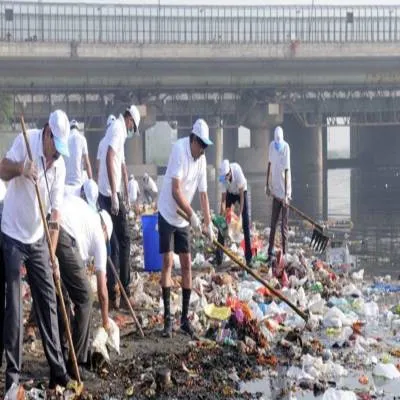
Stakeholder participation remains an essential element of river rejuvenation. In February 2025, public awareness activities — including cultural programmes, riverbank aartis, cleanliness drives, yatras and creative competitions — were organised in multiple States such as Andhra Pradesh, Assam, Chhattisgarh, Jammu and Kashmir, Kerala, Manipur, Maharashtra, Nagaland, Sikkim, Tamil Nadu, Orissa, Uttar Pradesh and Uttarakhand.
Jalaj Centres, established under the National Mission for Clean Ganga, promote community engagement through models such as dolphin safaris, homestays, livelihood hubs and awareness points. Ganga Paharis have also been trained and deployed as local volunteers to support biodiversity protection and maintain river cleanliness in the Ganga basin.
The Namami Gange programme has been recognised as one of the world’s top ten Restoration Flagship initiatives at the United Nations Conference on Biological Diversity under the UN Decade on Ecosystem Restoration, for its work in reversing riverine ecological degradation.
The Ganga Utsav is celebrated annually to raise nationwide awareness on river conservation. Cleanliness, sanitation and solid waste management initiatives under the Swachh Bharat Mission also contribute to river health.
The Ministry of Jal Shakti’s Jal Shakti Abhiyan: Catch the Rain continues as an annual drive focusing on water conservation, rejuvenation of water bodies, community involvement and improved water-use efficiency. To reinforce its impact, the Jal Sanchay Jan Bhagidari initiative was launched in Surat, Gujarat on 6 September 2024, promoting rainwater harvesting, aquifer recharge and recharge shafts, and has already demonstrated strong results.
The information was provided by the Minister of State for Jal Shakti, Shri Raj Bhushan Choudhary, in a written reply in the Rajya Sabha.


Subscribe Now
Subscribe to our Newsletter & Stay updated
RECENT POSTS
Popular Tags
Folliow us