

Schedule a Call Back
EU Carbon Tax Set To Hit India’s Steel Exports
2025-12-09
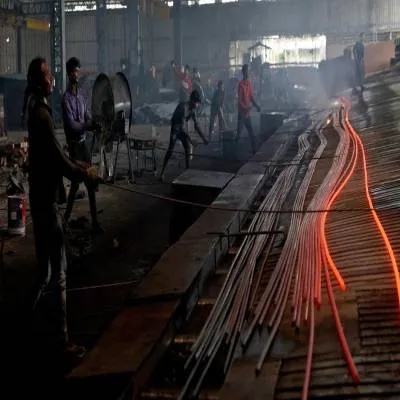 India’s steel exports to Europe are expected to decline once the European Union’s carbon tax comes into force next month, prompting domestic producers to look for alternative buyers in Africa and the Middle East, according to industry executives and analysts. From 1 January, steel imported into the European Economic Area will be subject to a levy under the EU’s Carbon Border Adjustment Mechanism (CBAM), which also covers cement, electricity, fertilisers and other emissions-intensive products.
India, the world’s second-largest crude steel producer after China, currently directs around two-thirds of its steel exports to Europe. Experts say the new regime will force Indian mills to accelerate emissions reduction. Former steel secretary Aruna Sharma said companies recognise the need for environmentally responsible production but are simultaneously scouting for new export markets.
Most Indian steel is produced using blast furnaces, which generate significantly higher emissions than electric arc furnaces. The Ministry of Steel’s top civil servant, Sandeep Poundrik, noted earlier that further blast furnace expansion is a concern. Global Energy Monitor estimates that upcoming capacity additions could increase sectoral emissions by roughly 680 million metric tonnes of carbon-dioxide equivalent.
Steady domestic demand—backed by infrastructure spending—has spurred Indian steelmakers to expand capacity. However, the new EU levy is expected to weigh on export volumes in the near term. “Most companies are still figuring out how to deal with CBAM,” said Ravi Sodah, analyst at Elara Capital. “It is expected to slow down India’s exports to the EU.”
Two senior executives at major steel firms said they had little clarity on how the tax would be calculated. One noted that with about 60 per cent of their exports heading to Europe, clarity on whether the tax would be uniform or company-specific was crucial.
According to CreditSights’ Lakshmanan R, the levy will increase the cost of Indian steel exports to Europe—particularly those produced via blast furnaces—compressing margins and eroding market share unless emissions fall. In response, producers are seeking to diversify their customer base, with mills targeting the Middle East through quick delivery commitments and flexible payment terms, said CRU Group principal analyst Shankhadeep Mukherjee.


Subscribe Now
Subscribe to our Newsletter & Stay updated
RECENT POSTS
Popular Tags
Folliow us