






Schedule a Call Back
Battery storage cost drops to Rs 2.1/unit, boosting grid-scale adoption
2025-12-18
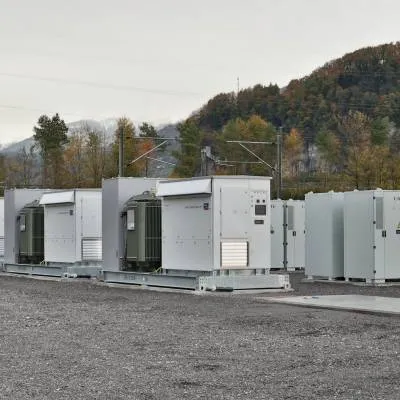
Battery Energy Storage System (BESS) costs in India have declined sharply to Rs 2.1 per unit, compared with about Rs 10.18 per unit discovered through tariff-based competitive bidding during 2022–23, the Ministry of Power informed Parliament. The steep reduction is expected to significantly accelerate grid-scale battery storage adoption and support renewable energy integration.
According to a statement from the Ministry of Power, the BESS tariff discovered during FY2022–23 was around Rs 10.18/kWh, assuming the storage system is utilised for two cycles per day. However, recent competitive bidding outcomes indicate that storage costs have fallen substantially to nearly Rs 2.1/kWh, even without viability gap funding (VGF), when operated at two cycles daily.
The ministry noted that, based on prevailing market trends, BESS assets are more likely to be utilised at about 1.5 cycles per day. At this utilisation level, the effective storage cost works out to around Rs 2.8/kWh. In comparison, electricity tariffs discovered in recent solar power tenders are averaging about Rs 2.5/kWh, highlighting the increasing competitiveness of battery-backed renewable energy solutions.
To improve affordability and scale deployment, the Ministry of Power is implementing a VGF scheme for setting up 13,220 MWh of BESS capacity, backed by budgetary support of Rs 37.60 billion. In addition, a second VGF scheme was launched in June 2025 for the development of 30 GWh of BESS capacity, with financial support of Rs 54 billion from the Power System Development Fund (PSDF).
The government has also provided policy incentives, including a waiver of Inter-State Transmission System (ISTS) charges for 12 years for co-located BESS projects commissioned by June 2028. For non-co-located BESS projects, ISTS charge waivers are available for projects commissioned before June 2025, after which the waiver will be reduced annually in graded steps of 25 per cent.
Further strengthening the ecosystem, the Ministry of Heavy Industries is implementing the Production-Linked Incentive (PLI) scheme under the National Programme on Advanced Chemistry Cell (ACC) Battery Storage. The scheme aims to establish 50 GWh of domestic ACC manufacturing capacity, with 10 GWh earmarked for grid-scale stationary storage applications, supported by an outlay of Rs 181 billion.
The government said the PLI initiative is expected to boost domestic manufacturing, reduce import dependence and help bring down battery storage costs further in the coming years.
News source: Outlook Planet


Subscribe Now
Subscribe to our Newsletter & Stay updated
RECENT POSTS
Popular Tags
Folliow us