



Schedule a Call Back
EU Draws a Line on Mobile Cranes
2025-12-22
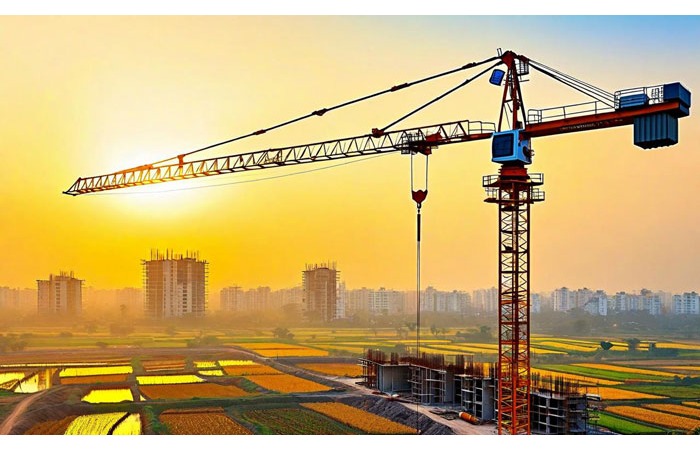
The European mobile crane industry has entered a decisive phase as the European Commission initiates an anti-dumping investigation into imports of Chinese mobile cranes. The move follows a formal trade complaint by leading European manufacturers, marking a significant development for global equipment markets and sending a clear signal on the importance of fair competition in strategically critical equipment segments.
Filed under the aegis of the VDMA Materials Handling and Intralogistics Association, the complaint highlights mounting concerns over the rapid influx of Chinese mobile cranes into the European Union (EU) at prices that European producers argue do not reflect market realities. The case focuses on self-propelled mobile cranes with a lifting capacity of 30 tonnes and above—equipment that plays a vital role in infrastructure creation, energy transition projects, defence logistics and emergency response systems.
The trade complaint has been lodged by companies representing nearly 99 per cent of the EU’s mobile crane manufacturing base. These include Liebherr, Manitowoc, Sennebogen, and Tadano—all of whom maintain significant manufacturing operations within Europe.
According to the complaint, Chinese manufacturers benefit from a combination of direct and indirect government support mechanisms. These include subsidies, preferential tax regimes, reduced raw material costs and access to low-cost financing. Such advantages, European producers argue, enable export pricing that undercuts not only European selling prices but, in many cases, the actual cost of production.
Industry leaders have emphasised that while European manufacturers welcome competition, it must be conducted on equitable terms. When products enter the market at prices that do not reflect raw material, energy, labour and compliance costs, the long-term sustainability of domestic manufacturing comes under threat.
Mobile cranes are not just another category of construction equipment in Europe. High-capacity cranes are indispensable to the construction and maintenance of power transmission lines, substations and renewable energy installations—sectors central to Europe’s decarbonisation and energy security agenda.
Beyond energy infrastructure, mobile cranes are integral to road, rail and bridge construction, port modernisation and industrial plant development. They also play a critical role in defence logistics, including rapid deployment, equipment handling and personnel protection during military operations.
European manufacturers stress that dependence on non-EU suppliers for such equipment could expose the region to strategic vulnerabilities. Maintaining a strong domestic mobile crane industry is therefore seen as essential not only for employment and industrial capability, but also for long-term strategic autonomy.
“Our European industry welcomes fair competition, but it is patently unfair to compete with products whose selling conditions do not come close to covering the raw materials, energy and production costs of a European mobile crane manufacturer. Chinese manufacturers benefit from a wide range of subsidy mechanisms, which gives them a massively unfair advantage when exporting to the EU,” said Christoph Kleiner, Managing Director Sales, Liebherr-Werk Ehingen GmbH.

EU launches formal anti-dumping investigation
On 19 December 2025, the European Commission formally opened an anti-dumping investigation into imports of Chinese mobile cranes, responding to the evidence submitted by the complainants. The investigation will assess whether Chinese exporters are selling cranes in the EU at dumped prices and whether such imports are causing material injury to European producers.
The scope of the probe includes an examination of alleged predatory pricing practices, the scale of government support extended to Chinese manufacturers and the impact of these imports on production volumes, profitability, employment and investment within the EU.
VDMA estimates suggest that more than 7,000 direct jobs are at risk within Europe’s mobile crane manufacturing sector, with tens of thousands more potentially affected across the broader supply chain—from component suppliers and service providers to logistics and engineering firms.
?
“We believe in fair competition and have urged the European Commission to address the material injury to European industry caused by the dumping tactics of Chinese exporting producers. We call on the Commission to restore a level playing field across the EU,” said Aaron Ravenscroft, President & CEO, The Manitowoc Company Inc.
European manufacturers have welcomed the Commission’s decision as a necessary first step towards restoring balance in the market. In a joint statement, the complainants underlined their commitment to cooperating fully with the investigation and expressed hope for swift corrective measures if dumping is confirmed.
Industry executives have repeatedly highlighted that European-made mobile cranes comply with some of the world’s most stringent environmental, safety and data protection standards. Significant investments have been made in improving operational safety, emissions performance, digital controls and lifecycle efficiency—costs that are not always borne equally by global competitors.
From the European industry’s perspective, the issue is not about protectionism, but about ensuring that global competition reflects true market conditions rather than state-supported distortions.
Implications for global equipment markets
The EU’s anti-dumping action is being closely watched by equipment manufacturers and policymakers worldwide. Mobile cranes are a globally traded product, and pricing dynamics in Europe often influence procurement strategies in other regions, including the Middle East, Africa and parts of Asia.
For equipment buyers, the investigation could eventually lead to higher import duties on Chinese mobile cranes entering the EU, potentially reshaping supplier preferences and sourcing strategies. European manufacturers may gain pricing stability, enabling them to sustain investments in advanced technologies, alternative powertrains and digitalisation.
At the same time, the case underscores a broader trend of governments reassessing trade policies in sectors deemed critical to infrastructure resilience and national security. Similar debates are emerging globally around construction equipment, energy systems and advanced manufacturing.
Anti-dumping investigations typically span several months, during which the European Commission will gather data from exporters, importers and domestic manufacturers. Provisional measures, including temporary duties, may be imposed if preliminary findings confirm dumping and injury.
For Europe’s mobile crane industry, the outcome of this case could determine its competitive landscape for years to come. For the global equipment sector, it serves as a reminder that market access increasingly depends not only on price and performance, but also on transparency, compliance and fair-trade principles.
As infrastructure investment accelerates worldwide—driven by energy transition, urbanisation and resilience building—the balance between open markets and strategic industrial protection is set to remain a defining issue for the construction equipment industry.


Subscribe Now
Subscribe to our Newsletter & Stay updated
RECENT POSTS
Popular Tags
Folliow us
Related Stories
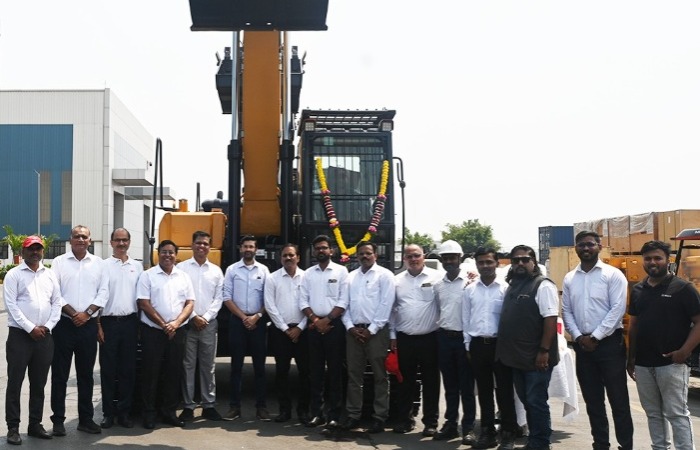
SANY India Hands Over 20 Excavators to J Infratech
SANY India successfully conducted the key handover and flag-off ceremony of 20 SY225C-10HD excavators to Mr Sidharth Kapil, GM Plant & Machin...
SANY India Opens Stall at INTERMAT India 2026
Day one at INTERMAT India 2026 began on a strong note as SANY India inaugurated its stall at Pune International Exhibition & Convention Centr...
Italian Machinery Exports Stay Stable Amid Uncertainty
Italian construction machinery exports remained broadly stable in 2025 at 3.226 billion euros, marking a marginal 0.5 per cent decline from the p...