


Schedule a Call Back
Panel Urges Railways To Diversify Freight Beyond Coal
2025-12-23
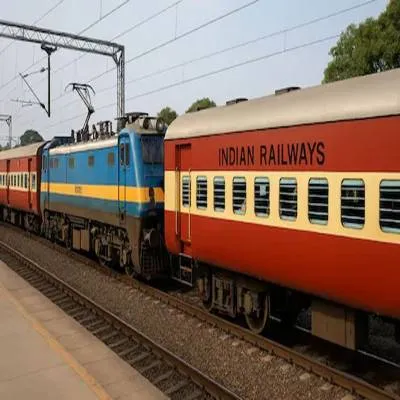 A parliamentary panel has urged Indian Railways to urgently diversify its freight portfolio beyond coal and other bulk commodities, warning that slowing revenue growth from traditional cargo could limit the rail network’s future expansion and financial resilience.
In a report tabled in Parliament, the Standing Committee on Railways, chaired by BJP MP C M Ramesh, said Railways must focus on high-growth segments largely dominated by road transport, including automobiles, FMCG and e-commerce, to strengthen freight earnings and reduce overdependence on coal.
Coal currently accounts for nearly half of Railways’ freight traffic. The committee noted that year-on-year revenue growth from coal and iron ore has begun to slow, highlighting the need for a broader commodity mix to ensure long-term stability. It recommended identifying cargo categories with low rail penetration but strong growth potential, studying their logistics requirements and removing operational constraints that discourage shippers from shifting to rail.
Referring to the National Rail Plan, the panel said India’s total freight demand is projected to exceed 6,000 million tonnes in 2025, while Railways currently handles only about 27 per cent of overall freight movement. Increasing rail’s share would be critical to sustaining freight revenues and easing pressure on road infrastructure, the report added.
The committee also reviewed the performance of the two operational Dedicated Freight Corridors Corporation of India corridors, spanning 2,741 km, and stressed the need to attract private investment given their capital-intensive nature. While detailed project reports for three additional corridors—East Coast, East–West and North–South—have been submitted to the Railway Board, private participation remains limited due to high capital costs, long gestation periods and revenue uncertainty. The panel cited the failure of the public–private partnership model for the Sonnagar–Dankuni section of the Eastern Dedicated Freight Corridor as evidence of weak private sector appetite.
On operations, the committee flagged shortages of trained crew as the most pressing challenge for Dedicated Freight Corridors and urged Railways to address manpower gaps on priority to ensure optimal utilisation of the infrastructure.
The panel concluded that diversifying freight cargo, improving workforce availability and creating more viable investment models are essential for Indian Railways to fully leverage its freight assets and sustain long-term growth.


Subscribe Now
Subscribe to our Newsletter & Stay updated
RECENT POSTS
Popular Tags
Folliow us