



Schedule a Call Back
Engineering the Unseen
2025-12-26

On a bustling construction site, the spotlight usually falls on towering cranes, massive excavators and earthmovers carving through rock and soil. Yet, hidden deep within these machines is a class of components that rarely gets attention but determines whether equipment works smoothly—or fails catastrophically. Bearings, bushings and motion control elements are the unsung heroes of construction equipment, quietly absorbing loads, enabling movement and ensuring reliability in some of the harshest operating environments imaginable.
As India’s infrastructure push gathers momentum—with highways, metros, ports and industrial corridors under rapid development—the demands placed on construction equipment have intensified. Machines are expected to work longer hours, handle heavier loads, and operate reliably in dust, heat, vibration and uneven terrain. This has pushed bearings from being “standard components” to highly engineered solutions, tailored to specific applications, duty cycles and sustainability goals.
In construction equipment, bearings are everywhere. They sit in engines, transmissions and gearboxes, but also in slew rings, pivot joints, axles, electric motors, pumps and hydraulic systems. Unlike bearings in relatively controlled factory environments, those used in excavators, wheel loaders or cranes must withstand extreme shock loads, misalignment, contamination and intermittent lubrication.
Spherical plain bearings, for instance, are widely used in pivoting and oscillating joints where movement is slow but loads are immense. Bushings play a critical role in lift arms, cylinder mounts and linkages, where relubrication may be difficult or impractical. Rod ends and ball joints enable flexibility in steering and hydraulic systems while maintaining tight tolerances under dynamic and static loads.
The construction equipment industry relies on components that can withstand extreme loads, constant shock, abrasive conditions, and continuous movement. Selecting the right bearing solution is therefore not just a design choice—it is central to machine uptime, safety and lifecycle cost.
From commodity to engineered solution
Traditionally, bearings were often treated as interchangeable commodities. That approach is rapidly changing. OEMs today are increasingly collaborating with bearing manufacturers early in the design phase to optimise load capacity, sealing, friction levels and service life.
Customisation has become a defining trend. Bearings and bushings are now engineered with specific materials, coatings and liners to match operating conditions. Hardened steels, corrosion-resistant alloys, PTFE liners and self-lubricating composites are being deployed to reduce maintenance and extend service intervals—an especially valuable advantage in remote or high-risk job sites.
Composite bearings and bushings, in particular, are gaining traction. Maintenance-free by design, they help improve uptime and eliminate the risk of lubrication-related failures. According to • Franc Cui, Technical Center Director, Polygon (Xiamen) Composite Materials, whose Polygon Composites brand supplies self-lubricating composite bearings globally, “Our key differentiation lies in product performance and design. Polygon bushings are designed to be maintenance-free, which directly improves equipment uptime.”
While India remains a cost-sensitive market, the shift towards higher productivity and lower total cost of ownership is driving OEMs to consider advanced bearing technologies that deliver long-term value rather than just lower upfront cost.
Localisation and capacity expansion
Another major transformation shaping the bearings landscape is localisation. With construction equipment volumes rising and supply chains under scrutiny, global bearing manufacturers are strengthening their manufacturing footprint in India.
Schaeffler India, for example, has significantly expanded its local capacity to cater to growing industrial and construction equipment demand. The company inaugurated a new manufacturing hall at its Savli plant in Gujarat, adding over 10,000 sq m of production space and enabling the local production of mid- and large-sized roller bearings.
“The construction equipment industry has experienced significant growth, and Schaeffler is fully committed to meeting the rising demand for such equipment in India,” says Seshan Iyer, President, Bearings & Industrial Solutions, Schaeffler India. He adds that investments in localisation are aimed at reducing dependence on imports while delivering global-quality products suited to Indian operating conditions.
Such moves align closely with the government’s Make in India and Atmanirbhar Bharat initiatives, while also helping OEMs shorten lead times and improve supply reliability.
Bearings in the age of electrification
Electrification is no longer limited to passenger vehicles. Hybrid and electric technologies are gradually making their way into construction equipment, especially in compact machines, material handling equipment and applications where emissions and noise regulations are tightening.
This shift brings new challenges—and opportunities—for bearing manufacturers. Electric motors and power electronics place different demands on bearings, including higher speeds, electrical insulation requirements and lower noise levels. Current-insulated bearings, special coatings and advanced sealing solutions are becoming increasingly relevant.
Schaeffler, which operates mechatronics and electronics design centres in India, sees strong cross-sector synergies. Technologies developed for automotive electrification are increasingly finding applications in industrial and construction machinery. As Iyer points out, innovations showcased for combustion, hybrid and electric mobility “will be contributing to the construction machinery segment as well.”
Predictive maintenance
Perhaps the most profound change in the bearings ecosystem is the integration of digital technologies. Bearings are no longer passive mechanical components; they are becoming data sources.
Condition monitoring systems use vibration, temperature and acoustic data to detect early signs of bearing wear, imbalance or misalignment. AI-powered predictive maintenance solutions analyse this data to forecast failures well before they occur, transforming maintenance from reactive to proactive.
Schaeffler’s OPTIME Ecosystem and SmartCheck systems are examples of this shift. Battery-powered sensors and modular monitoring units provide continuous insights into machinery health, helping maintenance teams intervene early and avoid unplanned downtime.
As one recent industry article on predictive maintenance notes, AI algorithms can identify subtle patterns across multiple parameters—patterns that human operators or traditional systems might miss. In one use case, changes in sound signatures were enough to predict impending bearing failures before they escalated into breakdowns.
For construction equipment operators, where downtime can halt entire projects and inflate costs, such foresight is invaluable. Predictive maintenance not only extends bearing life but also improves overall equipment effectiveness (OEE), availability and safety.
Sustainability and lifecycle thinking
Sustainability is also reshaping bearing design and manufacturing. Longer-lasting bearings reduce material consumption, energy use and waste over the machine’s lifecycle. Maintenance-free solutions cut down on grease consumption and the environmental risks associated with lubrication.
Manufacturers are aligning operations with broader climate goals as well. Schaeffler India, for instance, has set ambitious targets to achieve climate-neutral production by 2030 and a climate-neutral supply chain by 2040, alongside increased use of renewable energy and reduced freshwater withdrawal.
From a customer perspective, sustainability increasingly overlaps with economics. Bearings that last longer, require less maintenance and reduce energy losses directly contribute to lower operating costs—making green choices commercially attractive.
Road ahead
As bearings and motion control solutions become more sophisticated, skill requirements across the value chain are rising. Design engineers must understand application-specific nuances, maintenance teams need to interpret condition monitoring data, and technicians must adapt to new materials and technologies.
While not directly focused on construction equipment alone, initiatives such as Schaeffler’s technical training programmes and mobile training vans help strengthen the broader ecosystem by enhancing skills in bearings, mechatronics and condition monitoring.
Looking ahead, the future of bearings in construction equipment will be shaped by deeper OEM-supplier collaboration, greater localisation, digital integration and a relentless focus on uptime and efficiency. Composite materials, smart bearings, predictive analytics and electrification-ready designs will increasingly define competitiveness.
In a sector where machines are judged by how reliably they perform day after day, bearings may remain invisible—but their impact is unmistakable. As India builds its infrastructure ambitions brick by brick, it is these silent components that ensure the wheels, arms and joints of progress keep moving smoothly.


Subscribe Now
Subscribe to our Newsletter & Stay updated
RECENT POSTS
Popular Tags
Folliow us
Related Stories
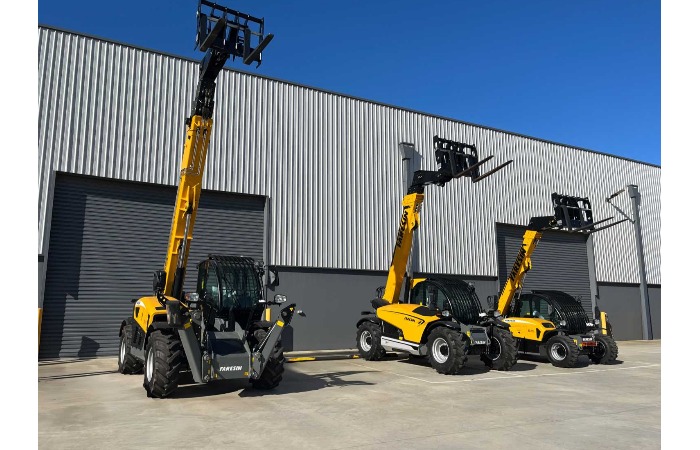
Faresin Appoints Haulotte as Australia Telehandler Distributor
Faresin Industries has appointed Haulotte Australia as the exclusive distributor of its telehandlers for the construction and equipment rental se...
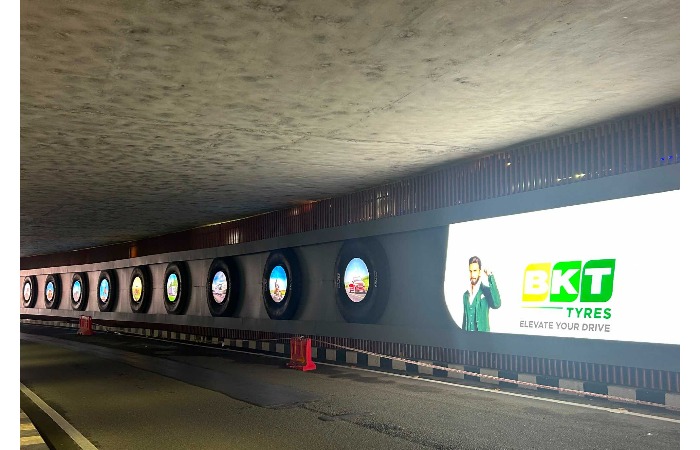
BKT Unveils Immersive Tyre Installation at Mumbai Airport
Balkrishna Industries (BKT), a global off-highway tyre leader with a growing presence in India's on-highway tyre market, has unveiled a distincti...
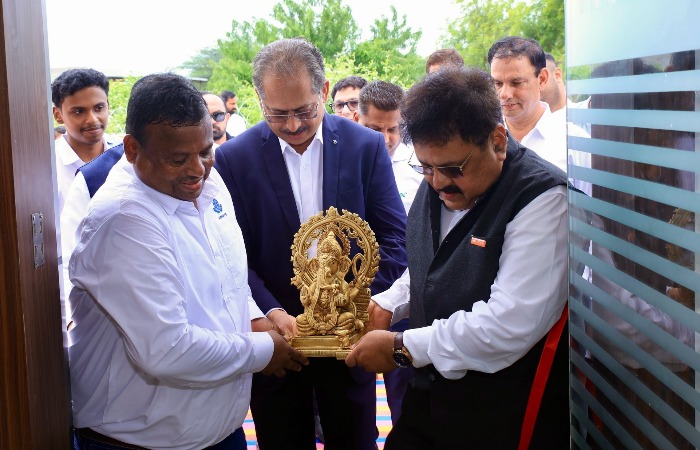
Tata Hitachi Inaugurates Regional Sales Office in Jaipur
Tata Hitachi has inaugurated its new Regional Sales Office in Jaipur, marking a step towards strengthening its presence and customer engagement i...