



Schedule a Call Back
APSRTC Plans Six Bus Stations via PPP; Employee Unions Protest Move
2026-01-21
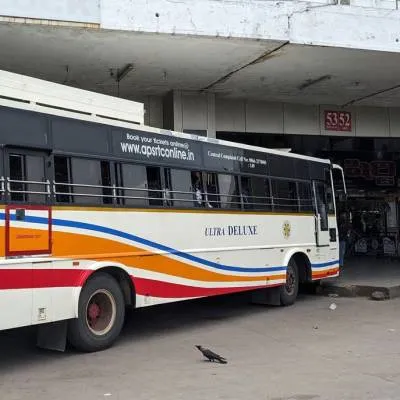
The Andhra Pradesh State Road Transport Corporation (APSRTC) has proposed to develop six major bus stations across the State under the Public-Private Partnership (PPP) model, aiming to modernise passenger facilities and generate additional non-fare revenue. However, the proposal has drawn strong opposition from RTC employee unions, who fear that long-term private control over public assets could weaken the corporation.
According to sources, the proposed projects include redevelopment of integrated bus terminals at Autonagar in Vijayawada, Rajvihar in Kurnool, Guntur and Kadapa. In addition, APSRTC plans to develop a modern intermodal station in Tirupati and a bus station-cum-commercial complex in Chittoor. The total estimated investment for the six projects is around Rs 9.58 billion.
Among these, the Autonagar Integrated Bus Terminal in Vijayawada, estimated to cost Rs 1.54 billion, is reportedly “ready to bid.” The Tirupati Intermodal Station, with a projected investment of Rs 4.95 billion, has completed its Detailed Project Report (DPR), while DPR preparation is underway for the remaining four projects.
The projects are proposed under various PPP formats, including Design–Finance–Build–Operate–Transfer (DF-BOT), Build–Operate–Transfer with Viability Gap Funding (BOT-VGF), and BOT models with revenue-sharing mechanisms.
RTC employee unions have strongly opposed the move, alleging that the PPP model would amount to backdoor privatisation of valuable public assets for periods ranging from three to five decades. Union leaders argue that APSRTC has historically modernised its infrastructure using internal resources, citing large-scale renovations undertaken during the 2015–16 period under then Vice-Chairman and Managing Director N Sambasiva Rao without private participation.
According to the unions, those projects demonstrated APSRTC’s capacity to develop and maintain its own assets. They warned that transferring commercially valuable land and infrastructure to private players could erode the corporation’s long-term financial strength and limit future revenue opportunities. The unions have demanded direct government funding for redevelopment instead of PPP. “After renovation of Vijayawada bus stand, commercial revenue increased and went directly to the corporation. Under PPP, most of the revenue will go to private companies,” union leaders said.
APSRTC officials, however, maintained that the PPP model is intended to mobilise investment, enhance passenger amenities and integrate commercial facilities without burdening the State exchequer. Officials said APSRTC is working with KPMG as transaction and project management consultant to identify eligible private players, structure the PPP framework and facilitate the bidding process.
News source: The New Indian Express


Subscribe Now
Subscribe to our Newsletter & Stay updated
RECENT POSTS
Popular Tags
Folliow us