




Schedule a Call Back
India AI Impact Summit Highlights Data Centre Energy Challenges
2026-02-20
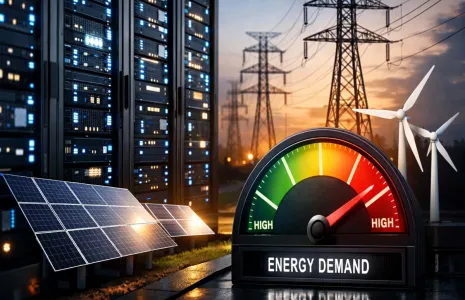 The session From Insights to Action for Resilient, High-Performance Data Centres took place on the second day of the India AI Impact Summit 2026 and was organised with the US Department of Energy and the National Lab of the Rockies, formerly the National Renewable Energy Laboratory. The meeting examined how AI-driven compute expansion is creating a major energy challenge for digital infrastructure. Participants outlined implications for energy systems, infrastructure planning and resilience.\n\nSpeakers said rapid growth in compute demand is producing variable and concentrated power loads that challenge conventional grid planning and elevate data centres from passive consumers to dynamic assets affecting grid reliability, cost and investment choices. The discussion underlined the need for planning, market design and operational flexibility to manage these loads. Attention focused on the energy–water nexus and on cooling innovations to reduce resource intensity.\n\nPanellists warned that fragmented regulation and the lack of a binding national framework are impeding coherent scale up, with states driving much of the expansion under competitive federalism. Jaqueline Cochran of the National Lab of the Rockies urged an integrated approach from chips and cooling to grids and generation to balance affordability, reliability and deployment speed. Arunabha Ghosh of the Council on Energy, Environment and Water highlighted the need for coordinated policy that aligns investment with resource efficiency.\n\nMurali Baggu of the US Department of Energy described a chip-to-grid co-optimisation approach and outlined work at the National Lab of the Rockies Colorado high performance computing data centre, a 10,000 sq. ft facility with up to 10 megawatts (MW) of computing power for modelling, simulation and AI research. Abhijit Abhyankar of IIT Delhi emphasised that AI data centres are among the most energy-intensive components of digital infrastructure and that power, cooling, water and carbon footprints must be addressed together. Delegates concluded that integrated planning and regulatory mechanisms that balance innovation, affordability and reliability are essential to enable sustainable AI growth and long-term resilience.


Subscribe Now
Subscribe to our Newsletter & Stay updated
RECENT POSTS
Popular Tags
Folliow us