




Schedule a Call Back
How India’s Pre-Owned CE Market is Rewriting Rules
2026-02-25
India’s construction equipment industry is undergoing a fundamental shift. While infrastructure ambitions continue to expand and execution timelines grow tighter, the way equipment is sourced, financed, deployed, and monetised is being redefined. Today, the pre-owned construction equipment industry has reached parity with the new equipment market—and in several segments and regions, is already larger in terms of transaction volumes and market participation.
At the centre of this transformation lies the pre-owned construction equipment ecosystem, shaped by three powerful forces—Drive, Disruption, and Digitisation. What was once viewed as a secondary or distressed segment has today emerged as a strategic backbone of India’s infrastructure execution, enabling flexibility, speed, and capital efficiency.
Having worked closely with equipment owners, contractors, financiers, OEMs, and buyers across the country, this evolution is no longer theoretical—it is visible on the ground, every day.
Drive
The traditional growth model in construction equipment was anchored in new equipment sales and capacity expansion. Today, the industry’s drive is decisively shifting towards maximising lifecycle value from existing assets.
India’s infrastructure push—across highways, mining, railways, ports, urban development, and renewable energy—has created sustained demand for equipment. However, rising capital costs, project-based demand cycles, and tighter financial discipline have compelled contractors and fleet operators to rethink asset ownership models.
In this environment, pre-owned equipment has evolved from a fallback option to a strategic choice. Faster availability, lower capital outlay, and improved resale visibility make pre-owned assets critical for project continuity and profitability.
This shift is clearly reflected in the organised pre-owned market. At Shriram Automall India (SAMIL)—India’s largest phygital marketplace for pre-owned vehicles and equipment, and other assets—over 72,000 pre-owned construction equipment units have been successfully transacted. The scale itself underlines a structural change: asset optimisation is replacing asset accumulation.
The real drive today is not about buying more machines—it is about deploying the right machine, for the right duration, at the right value.
Disruption
Disruption in the construction equipment sector extends well beyond technology. Global trade uncertainties, geopolitical tensions, commodity price volatility, supply chain realignments, and regulatory shifts have altered how equipment is procured and redeployed.
Extended lead times for new equipment, cost escalation, and faster depreciation have increased reliance on the pre-owned ecosystem. During periods of volatility, the secondary market plays a stabilising role—bridging demand–supply gaps and preventing project delays.
Disruption has also reshaped buyer behaviour. Customers today are more data-driven, cautious, and RoI-focused. Instead of locking capital into long-tenure ownership, many prefer redeployment, refurbishment, or asset-light strategies, supported by reliable exit options.
This is where structured pre-owned marketplaces become critical infrastructure enablers. At SAMIL, disruption has reinforced the importance of market agility—the ability to liquidate assets efficiently for sellers while offering buyers transparent access to nationwide inventory, even in uncertain conditions.
Digitisation
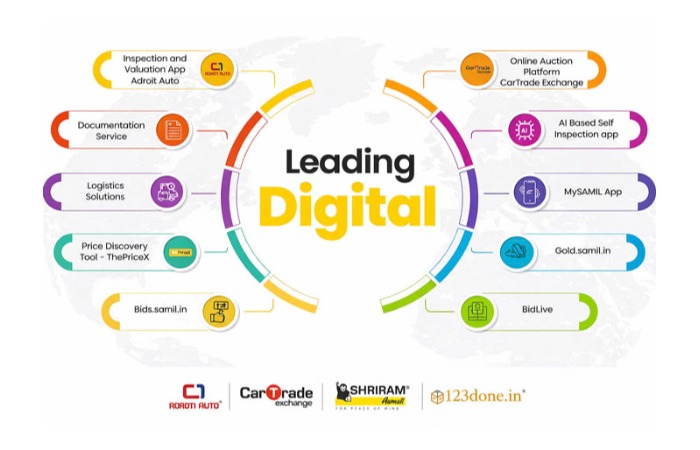
Digitisation has become the backbone of the pre-owned construction equipment ecosystem. Beyond online listings, it is now about price discovery, transparency, speed, and trust—all essential for scaling secondary markets.
At Shriram Automall, digitisation has been central to creating “One India, One Market” for pre-owned equipment—a unified national marketplace that eliminates regional price arbitrage and information asymmetry. Whether a machine is located in a mining cluster, infrastructure corridor, or a Tier III town, digitisation ensures it is visible, discoverable, and competitively valued across India.
Turning data into decisions
One of the biggest historical challenges in the pre-owned equipment market has been pricing subjectivity. Digitisation is rapidly changing that. At SAMIL, every transaction generates granular insights into equipment condition, age, utilisation, regional demand, and buyer behaviour. These insights power The PriceX, SAMIL’s proprietary price solution for pre-owned equipment.
PriceX enables stakeholders—lenders, fleet owners, contractors, and sellers—to:
- Arrive at realistic, market-backed valuations
- Time asset liquidation or acquisition strategically
- Reduce negotiation friction and uncertainty
- Improve recovery outcomes and return on capital
In volatile markets, such price intelligence transforms risk management, turning pre-owned equipment from an uncertain asset into a predictable financial instrument.
Managing disruption through digital resilience
Digitisation is not only improving efficiency—it is enabling resilience. When markets fluctuate, digital platforms allow faster portfolio rebalancing, quicker capital release, and efficient redeployment of equipment across regions.
For lenders, structured digital auctions accelerate recoveries while preserving asset value. For contractors, nationwide access to pre-owned inventory ensures project continuity when new equipment supply is constrained.
At SAMIL, sustained investments in AI-driven analytics, digital documentation, real-time bidding, and compliance frameworks have enabled continuity and trust—even during periods of market stress. Technology does not replace human expertise; it scales informed decision-making.
Sustainability, policy, and role of pre-owned markets
Sustainability is increasingly influencing infrastructure and construction decisions. Extending asset lifecycles, promoting reuse, and reducing fresh manufacturing are essential to lowering environmental impact.
Organised pre-owned equipment markets directly support circular economy principles by enabling efficient redeployment and broader access for small and mid-sized contractors. Digitisation strengthens this ecosystem through traceability, condition assessment, and compliance—making sustainability measurable, not aspirational.
Policy recognition of structured secondary markets can further strengthen India’s infrastructure ecosystem by aligning economic efficiency with environmental responsibility.
The road ahead
India’s construction equipment ecosystem is being reshaped by drive, disruption, and digitisation—with the pre-owned market emerging as a critical growth engine.
- Drive will come from maximising lifecycle value, not just ownership
- Disruption will continue to reward flexibility and speed
- Digitisation will enable trust, transparency, and scale
From Shriram Automall’s journey, one insight stands out: when data, technology, and market access converge, pre-owned equipment markets become more efficient, inclusive, and resilient.
The future of India’s construction equipment sector will not be defined only by how many new machines are added—but by how intelligently existing assets are redeployed, valued, and sustained.
ABOUT THE AUTHOR:
Sameer Malhotra, Director and CEO, Shriram Automall India


Subscribe Now
Subscribe to our Newsletter & Stay updated
RECENT POSTS
Popular Tags
Folliow us
Related Stories
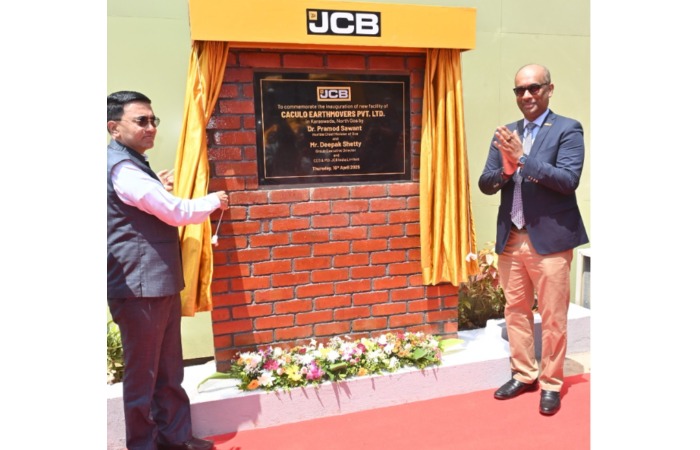
Caculo JCB Opens New 3S Facility in North Goa
Caculo Earthmovers (Caculo JCB) has inaugurated its new 3S facility in Karaswada, North Goa, marking a key step in its growth journey. The facili...
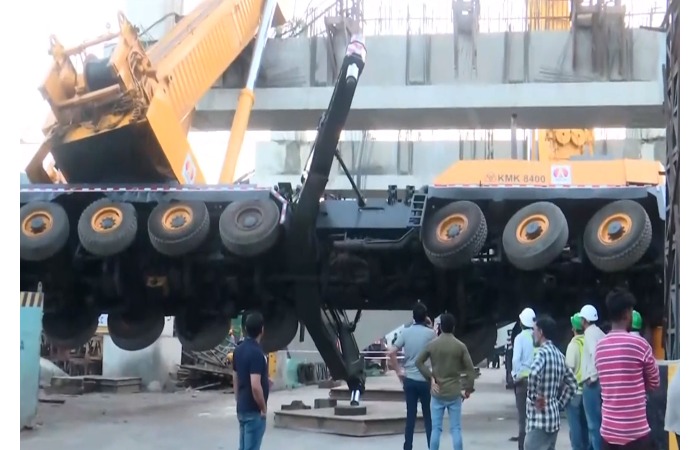
Beam Falls at BKC Metro Site, Crane Topples
A major accident was reported recently at a metro construction site in Mumbai’s Bandra Kurla Complex after a heavy beam being lifted onto a pil...
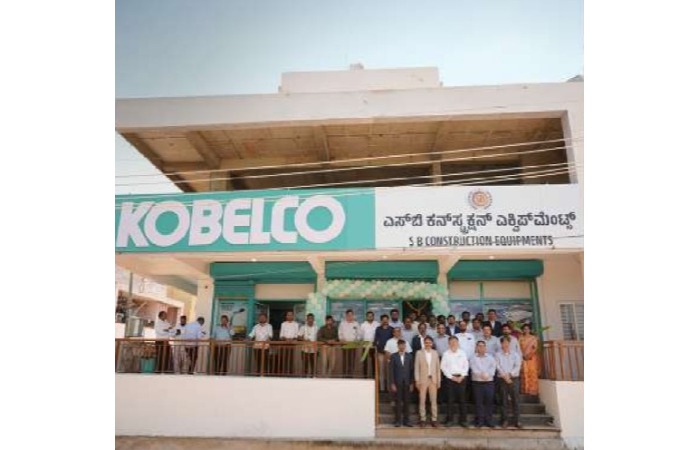
Kobelco Opens New Dealership in Hubballi
Kobelco Construction Equipment India has recently inaugurated a new dealership, SB Construction Equipments, in Hubballi, North Karnataka, marking...