
Schedule a Call Back
Second TBM Starts Work on India’s First Undersea Rail Tunnel
2026-07-20
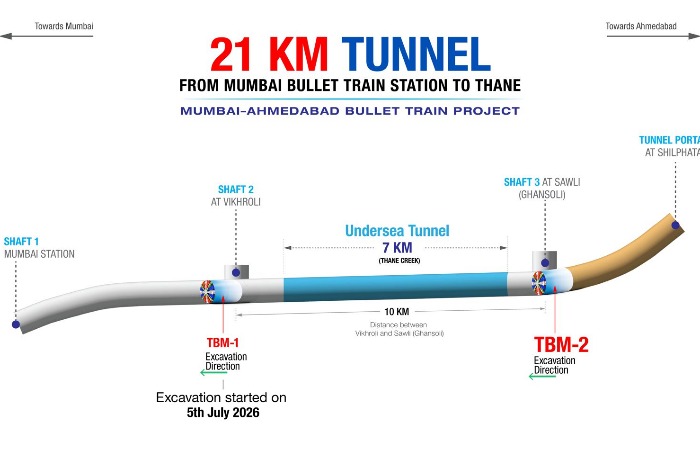
The second Tunnel Boring Machine (TBM) has commenced excavation from Sawli in Ghansoli towards Vikhroli for the Mumbai–Ahmedabad Bullet Train Project. The 10-km stretch includes a 7-km section beneath Thane Creek, making it India’s first undersea tunnel for a railway corridor.
The project includes a 21-km underground tunnel section, of which 16 km between Sawli and the Bandra Kurla Complex in Mumbai will be excavated using TBMs. The first machine began its 6-km drive from Vikhroli towards BKC on 5 July 2026. The remaining 5-km section has been completed using the New Austrian Tunnelling Method.
The newly launched TBM is among the largest machines deployed for railway tunnelling in India. It has a cutterhead diameter of 13.6 metres, weighs around 3,200 tonnes and measures 96 metres in length. Its principal components include the cutterhead, main bearing, jaw crusher, erector, shields and four specialised support gantries.
Configured as a semi-automatic, slurry-based Mixshield machine, the TBM uses pressurised bentonite slurry to stabilise the tunnel face during excavation. The technology has been selected to control ground settlement and reduce surface disruption within Mumbai’s densely developed suburban areas.
The TBM also incorporates a Semi-Continuous Advance system, enabling excavation and segment ring installation to proceed simultaneously. This is expected to improve the machine’s advance rate and support faster completion of tunnelling work.
A 39-metre-deep launch shaft was constructed at Sawli to facilitate the machine’s deployment. Due to space constraints, the TBM was lowered into the shaft in sections. The gantries were installed first and moved into the completed tunnel section, followed by the main shield and cutterhead.
The machine’s four double-storey gantries accommodate slurry pumps, hydraulic systems, grouting equipment, operator facilities, power systems, emergency refuge chambers, ventilation equipment and maintenance areas.

Safety systems include real-time monitoring for methane, oxygen, carbon monoxide and carbon dioxide. The machine is also equipped with automatic fire detection and suppression systems, a safety water curtain and sprinklers along the emergency escape route.
Support facilities at the shaft include water and slurry treatment plants, bentonite storage tanks, a dedicated power substation, backup generators, a ready-mix concrete plant, sewage treatment systems and slurry transportation infrastructure.
Real-time monitoring instruments have been installed to track surface settlement, structural displacement, strain, vibration, seismic activity and groundwater behaviour. The tunnel is being designed as a fully waterproof structure.
Double-layer Ethylene Propylene Diene Monomer gaskets and hydrophilic seals will protect the tunnel lining against water ingress, supporting its long-term durability and operational safety.


Subscribe Now
Subscribe to our Newsletter & Stay updated
RECENT POSTS
Popular Tags
Folliow us
Related Stories
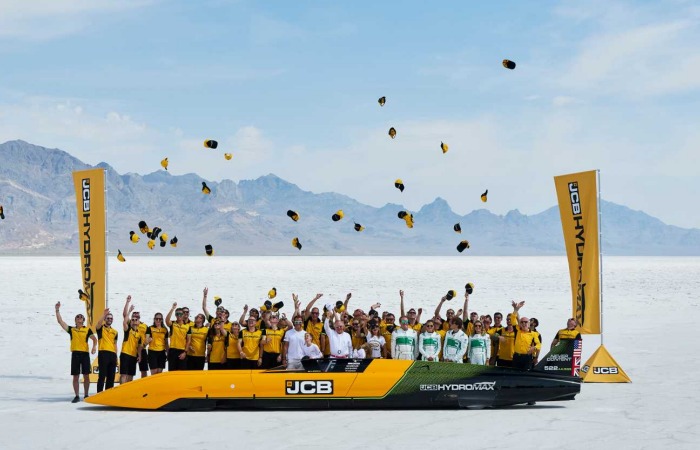
JCB Hydromax Sets Hydrogen Land Speed Record at 406.320 mph
British engineering major JCB has set a new world land speed record with its hydrogen-powered JCB Hydromax, achieving an average speed of 406.320...

BKT to Showcase Advanced Off-Highway Tyres at Bauma ConExpo
Balkrishna Industries Ltd (BKT) will showcase its latest off-highway tyre solutions at Bauma ConExpo India 2026, scheduled from September 15-18 a...
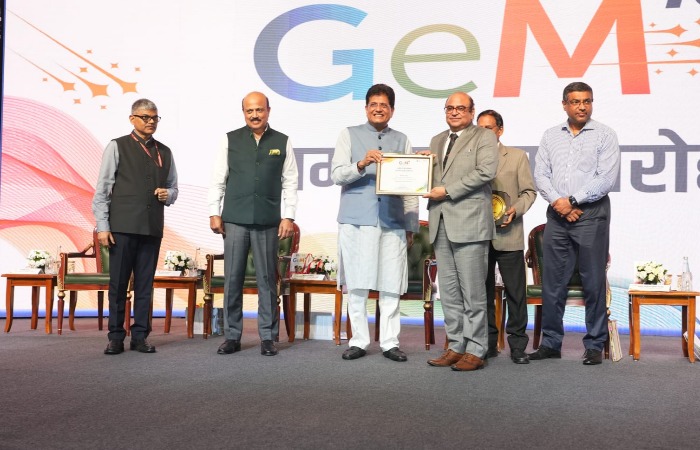
BEML Wins GeM Award for Highest MSE Order Value
BEML Limited has received the “Maximum Order Value to MSEs” award at the 10th Foundation Day celebrations of the Government e-Marketplace (Ge...