



Schedule a Call Back
The New Road Race
2026-07-29
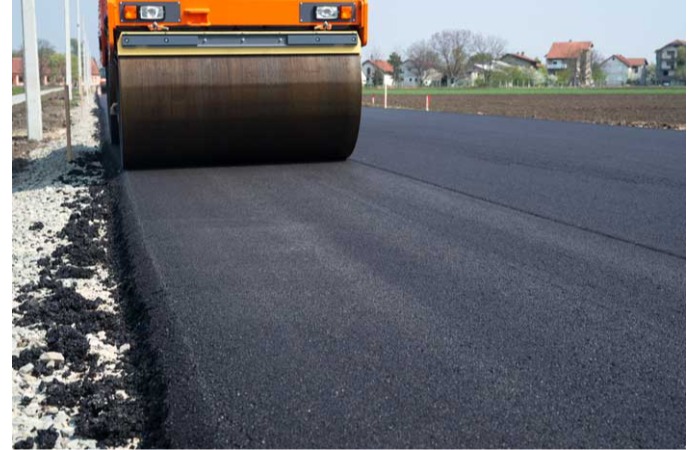
India’s highway story is entering a more demanding phase. The task is no longer simply to build more kilometres; it is to build roads that can withstand heavier traffic, extreme weather, higher axle loads and rising expectations on safety, ride quality and lifecycle performance. As the country moves from conventional highway expansion towards access-controlled expressways, high-speed corridors and economic corridors, the definition of productivity on a road project is changing.
The scale is already formidable. India constructed 10,660 km of National Highways in FY2024-25, equivalent to about 29.2 km a day. The National Highway network has expanded to more than 1.46 lakh km, while the length of four-lane-and-above National Highways has more than doubled from 18,371 km in 2014 to 43,512 km. The next frontier is even more ambitious: as of July 2026, 10,389 km of National High-Speed Corridors had been awarded, of which 4,809 km had been completed and 5,580 km remained under implementation.
This scale puts the spotlight on a fundamental question: How can India build faster without compromising the quality and life of the pavement?
The answer increasingly lies in synchronising the entire construction ecosystem – from material planning and weather monitoring to paving, compaction, quality control, machine utilisation and data. The road project of the future is likely to be less about individual machines working harder and more about the entire paving train working smarter.
From machine productivity to process productivity
On a highway project, a high-capacity paver is only as productive as the system feeding it. A delay in aggregate supply, concrete production, material transportation or quality approval can bring an otherwise efficient paving operation to a halt. That is why pre-construction planning is becoming increasingly important.
“Conducting mock-ups can help synchronise material, machinery, method and crew before the job,” says Shrinath Rao, Head Infrastructure, L&T Construction.
The principle is simple: identify bottlenecks before production begins rather than trying to resolve them while the paver is already on the road.
Atasi Das, Assistant Vice President, GR Infraprojects, places similar emphasis on planning the next day's material requirements. Coordination between QA-QC, highway execution, planning, mechanical and stores teams can prevent small gaps from turning into long stoppages.
Weather is another variable that increasingly needs to be treated as a production parameter rather than an external disruption. Rainfall, temperature, wind speed and humidity can influence paving operations and the final quality of pavement concrete. For contractors, this means monitoring site conditions continuously and adapting operations accordingly.
GR Infra has developed a low-cost Mobile Construction Quality Monitoring Van that brings weather and quality monitoring closer to the work front. The unit can provide real-time readings of parameters including wind direction, wind velocity, humidity and temperature. Such systems illustrate a broader shift underway in road construction: quality control is moving from periodic inspection towards continuous monitoring.
“By monitoring air speeds and deploying wind barriers wherever required, rapid evaporation and shrinkage cracks are avoided,” says Rao.
The paving train gets smarter
Productivity gains are also being achieved by increasing the capability and consistency of the paving operation itself.
Das advocates the use of advanced slipform pavers with automatic texturing and curing systems, capable of paving widths of up to 16 m in a single pass. But machine capacity alone does not guarantee productivity. The bigger challenge is maintaining continuity.
Every unnecessary stoppage can create joints, inconsistencies and variations in pavement quality. The speed of the paver therefore has to be carefully matched with the rate at which material arrives at the site. This is where the concept of a coordinated paving train becomes important.
At L&T, the approach includes batching and mixing plants with capacity around 25 per cent higher than planned production requirements to maintain continuity. Chilling plants and insulated storage tanks help control water temperature, while flatbed tippers minimise slurry leakage. Wheel loaders maintain the flow of material to batching plants.
The equipment chain extends beyond the paver. A typical paving train can include a concrete distributor, vibrators, levelling screed, oscillating beam, mechanised float, texturing machine and curing compound sprayer.
The objective is not merely to increase individual machine output. It is to remove interruptions between machines.
That distinction is critical. A paver capable of delivering high output can become a bottleneck if the batching plant, haulage fleet or material handling system cannot keep pace. Conversely, excessive upstream capacity creates idle equipment and unnecessary cost.
The next generation of road projects will therefore demand increasingly precise matching of plant capacity, transport logistics and paving speed.
Precision at the joint
Pavement quality is also being influenced by small operational decisions that can have a major impact over the life of a road.
At GR Infra, the timing of initial saw-cutting of joints in pavement quality concrete is determined through a time-precision approach. The objective is to identify the appropriate dormancy period and achieve a clean vertical cut.
Chemical sealants and compression seals can be used depending on the joint design. Rich diamond blades are used to produce smooth vertical cuts. The underlying principle is important: the faster the construction cycle becomes, the less tolerance there is for process variability. As road projects become larger and more mechanised, precision is becoming as important as speed.
Compaction moves from experience to data
If paving is about placing the material correctly, compaction is about ensuring that the pavement develops the required density and performance. This is another area where technology is changing the role of the operator.
Intelligent compaction systems can use sensors and non-nuclear density measurement technologies to provide information on the state of compaction while the machine is working. Instead of relying solely on post-process testing, contractors can increasingly see what is happening beneath the roller in real time.
According to Cube Highways Technologies, intelligent compaction can prevent unnecessary passes and the associated consumption of time and fuel. The technology is particularly valuable because over-compaction can be as undesirable as insufficient compaction. Achieving the specified density with the minimum number of passes can improve productivity while reducing equipment hours.
Professor Nikhil Saboo, Associate Professor, Department of Civil Engineering, IIT Roorkee, and a member of the Transportation Research Group of India, points out that intelligent compaction can cost only around 3 to 6 per cent more than conventional systems, depending on the technology configuration. The larger question, however, is adoption.
Intelligent compaction is still not universally specified across road contracts. Wider deployment will require greater standardisation, clearer specifications and greater familiarity among contractors and engineers.
For a country building roads at scale, this could become an important policy opportunity: if data can demonstrate that intelligent compaction improves quality while reducing unnecessary machine passes, its inclusion in specifications could accelerate adoption.
The road surface becomes measurable
Technology is also moving beyond the roller. Machine-control systems can measure parameters such as amplitude, vibration frequency and compaction end point in real time. Temperature sensing systems mounted on pavers can scan the freshly laid mat and identify cold spots that could subsequently become weak areas. For contractors, continuous sensing offers an advantage over occasional spot checks.
A handheld infrared camera can identify temperature variations at selected locations, but a sensor integrated with the paving operation can potentially provide continuous information across the pavement width. This changes the quality-control philosophy from “test and correct” to “measure and prevent.”
That distinction will become increasingly important as projects become longer, faster and more capital intensive.
Thermal segregation: the hidden productivity killer
For asphalt paving, one of the biggest challenges is maintaining material consistency from the plant to the finished pavement. Material transfer vehicles (MTVs) offer one solution. By transferring hot-mix asphalt from haul trucks to the paver in a continuous process, they can reduce thermal segregation and minimise the stop-start movement that can lead to inconsistent pavement surfaces.
Cube Highways points out that the conventional process of trucks feeding the paver can involve repeated stopping and pushing of material into the hopper. An MTV creates a buffer between the trucks and paver, helping maintain a more continuous flow.
This is particularly relevant to India’s expanding expressway network, where longer paving stretches and higher productivity targets demand greater control over material temperature and consistency. The value proposition of such equipment therefore goes beyond output. It is about protecting the quality of every tonnes of asphalt that reaches the pavement.
Lower-temperature paving gains ground
Productivity is no longer being measured only in kilometres per day. Energy consumption, emissions and material efficiency are becoming part of the equation.
Satyanarayan Purohit, Vice President, Dilip Buildcon, highlights the growing use of cold-mix and warm-mix technologies. Cold-mix technology using emulsions can reduce the energy-intensive heating associated with conventional hot-mix processes. Warm-mix asphalt similarly allows compaction at lower temperatures than conventional mixes.
The advantages can extend beyond emissions. Lower temperatures can create opportunities for improved energy efficiency and more flexible paving operations.Micro-surfacing is another technology being deployed for specific road maintenance applications. Dilip Buildcon has used it in Jharkhand, Madhya Pradesh and Haryana after assessing project requirements.
The important shift is towards selecting the right technology for the right application, rather than treating every road project with the same construction methodology.
Building roads for longer lives
The next phase of India's highway expansion is also putting greater emphasis on pavement longevity. One technology receiving attention is stone mastic asphalt (SMA).
Saboo notes that SMA provides a stone-on-stone skeletal structure and offers high resistance to rutting, along with improved moisture resistance and flexibility. Its higher binder content and use of polymer-modified bitumen make it more expensive than conventional mixes, but the additional upfront cost can be weighed against longer pavement life and reduced maintenance.
SMA is already being used on major corridors such as the Delhi-Katra Expressway and Delhi-Vadodara Expressway. Its relevance could grow further as India moves towards the concept of longer-life or perpetual pavements, particularly on high-traffic expressways.However, the technology demands tighter process control. Temperature management, mix consistency and the correct compaction pattern become critical.
This again brings the discussion back to the same point: technology works only when the entire construction process is capable of supporting it.
What the industry needs next
The industry's wishlist is therefore extending beyond larger pavers, higher-capacity plants and faster rollers. Contractors need road contracts that recognise the value of advanced technology. They need specifications that encourage intelligent compaction, digital quality monitoring, efficient paving systems and lower-temperature technologies where technically appropriate. They also need better integration between design, construction and quality data.
The government has already been pushing digital systems to remove project bottlenecks. Land acquisition, environmental clearances and approvals are increasingly being handled through technology-enabled platforms, while project monitoring is becoming more data driven. The latest government framework for high-speed corridors also emphasises regular review at project, state and central levels and the use of technology to expedite execution. The next step is to take this digital approach right down to the pavement.
A road project can generate enormous quantities of data – from asphalt temperature and concrete properties to roller passes, density, material movement, machine utilisation, weather conditions and final surface quality. Bringing this data together could create a digital record of how every stretch of pavement was built. That could fundamentally change road construction.
Instead of evaluating productivity only by kilometres completed, contractors and developers could increasingly measure output, quality, fuel consumption, carbon intensity, machine utilisation and lifecycle performance together.
Beyond kilometres per day
India's highway programme is too large and strategically important for speed and quality to remain competing priorities. The country constructed 10,660 km of National Highways in FY2024-25, while NHAI alone built 5,313 km in FY2025-26, surpassing its annual target of 4,640 km. At the same time, the government is pushing ahead with a high-speed corridor programme that has already seen more than 10,000 km awarded.
The numbers make one thing clear: India has moved from building roads at scale to building increasingly sophisticated road assets at scale. That requires a different definition of productivity.
The winning road project will not necessarily be the one with the fastest paver or the biggest batching plant. It will be the one where material arrives at precisely the right time, equipment works in synchrony, weather is monitored continuously, compaction is data driven, quality is measured in real time and every interruption is engineered out of the process.
The road construction equipment industry is therefore entering a new phase. Machines are becoming connected, paving is becoming measurable and construction is becoming increasingly intelligent. The real race is no longer simply to pave faster. It is to build faster, build better and build roads that last longer.
QUICK BYTES
- Stone mastic asphalt, being used for the Delhi-Katra Expressway, has more potential to improve the longevity of high-traffic expressways.
- Intelligent compaction ensures that extra time and fuel is not wasted in over-compaction.
- Cold and warm-mix technologies consume less energy.
Achieve better paving outcomes
- Paving width: “Decisions on the width of paving ensure proper joint placement; paving track edges are well compacted for precise manoeuvring while sensor string lines are provided every 5 m,” says Shrinath Rao, Senior Vice President & Head, Transportation Infrastructure, L&T Construction.
- Use of fly ash: In concrete paving, using fly ash to partially replace cement slows down the strength gain but the long-term strength is more than conventional concrete, suggests Atasi Das, Assistant Vice President, GR Infraprojects. “Also, it reduces the initial shrinkage crack formation.”
- Other best practices: “Sand-washing plants improve the quality of sand; chilled water reduces the rate of evaporation of water from concrete during summer; and cleaning texturing brushes routinely ensures precise texturing,” says Das. “Routinely and randomly calibrating equipment helps.”
“Maintaining a concrete roll in front of the oscillation beam ensures the quality of paving and dimensional stability, while auto-cleaning texturing brushes and UV-resistant sealants ensure quality texturing and longevity,” adds Rao.


Subscribe Now
Subscribe to our Newsletter & Stay updated
RECENT POSTS
Popular Tags
Folliow us
Related Stories
The Road Ahead Begins Here
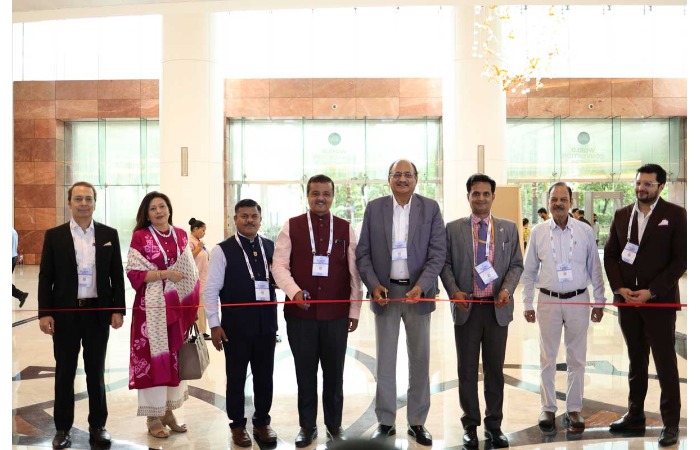
India’s roads and highways community gathered in full strength at the Jio World Convention Centre, Mumbai, on July 8-9, 2026, for the 16th edit...

Green Construction through Cement Innovation
India is building at a pace few countries can match. Highways, airports, housing, logistics parks, industrial corridors and urban infrastructure ar...

We see an immediate surge in demand for 100% electric equipment
Manish Kulkarni, Managing Director, Manitou South Asia, discusses the company’s product strategy and its alignment with India’s decarbon...