



Schedule a Call Back
SSLs are increasingly used in urban infra
2026-02-02
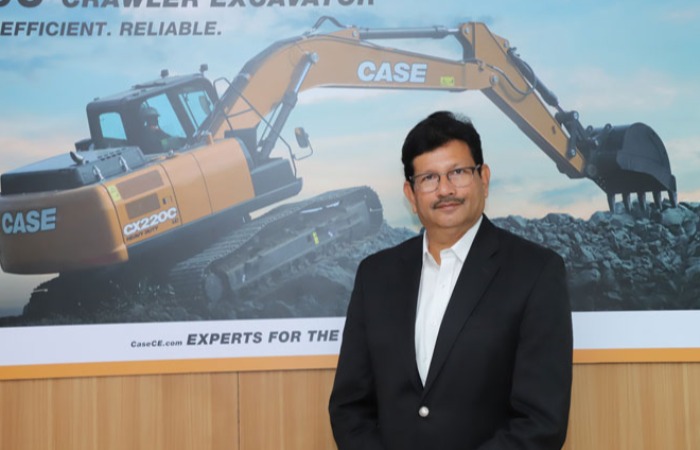
Satendra Tiwari, Executive Director – Operations, CASE Construction Equipment, shares his views on which smart or automated safety features deliver the greatest real-world value for skid steer applications in India.
How are skid steer loaders sold in India being engineered or configured differently to ensure safety in local operating conditions such as confined spaces, high dust, heat and mixed pedestrian traffic?
Skid steer loaders in India are increasingly used in urban infrastructure, municipal work, and waste-handling projects, where job sites are often tight, crowded, and unpredictable. Operators work in narrow lanes, high dust conditions, and extreme heat, often alongside pedestrians, other vehicles, and informal work setups. These realities make safety a key factor in how machines are engineered for the Indian market. As a result, manufacturers focus on compact design, easy maneuvering, better visibility, and systems that can handle long working hours in dusty and hot environments while maintaining control and stability.
With these Indian site conditions in mind, CASE designs its skid steer loaders to support safe and controlled operation. The CASE SR130B offers 49 hp power with a BS3-compliant Perkins engine, suitable for extended use. Its compact size, zero-radius turning, 590 kg rated operating capacity, and 2.3-tonne operating weight help operators work safely in confined areas while maintaining balance and predictable handling on demanding Indian job sites.
Which smart or automated safety features do you believe add the most real-world value on Indian skid steer applications, and which ones struggle due to site behaviour or operator habits?
Safety features that add the most real-world value on Indian skid steer applications are those that improve visibility, protect the operator, and work continuously without extra effort. CASE skid steer loaders are equipped with ROPS and FOPS certified cabins that help protect operators from rollovers and falling objects, which is critical on uneven and crowded sites. Wide glass panels improve all-round visibility, helping operators stay aware of workers and obstacles nearby. Audible alerts during machine movement provide timely warnings, supporting safer operation in confined spaces.
In addition to on-machine safety, digital systems are adding value beyond the cabin. Such as our CASE CEV V–compliant, fuel-efficient equipment is supported by myCaseConstruction telematics. This platform enables operators and site managers to monitor machine performance, optimise fleet usage, and plan predictive maintenance. These features improve safety and uptime while fitting well into the working habits of Indian job sites.
How do OEMs balance productivity expectations with built-in safety systems, especially when customers are sensitive to cycle time and machine cost?
OEMs need to meet high productivity expectations while ensuring safety, especially when operators closely track cycle time and machine cost. They look for machines that work fast, remain reliable, and are easy to handle on busy sites. To manage this balance, safety systems are designed as part of the machine, not added later. Good visibility, easy controls, and stable machine movement allow operators to work efficiently without slowing daily operations. Localised manufacturing and standard safety features also help control costs and reduce downtime, ensuring safety supports productivity rather than limiting it.
Beyond machine design, OEMs see a clear role in improving how safety features are used on site. This includes operator training, on-site demos, and guidance through dealer teams so operators understand machine behaviour and safety functions. Digital tools that track machine health and service needs help prevent unsafe conditions caused by delays or poor upkeep. Proper handover and machine settings ensure safety systems are used as intended. Together, these efforts help improve safer and more consistent operations across Indian job sites.


Subscribe Now
Subscribe to our Newsletter & Stay updated
RECENT POSTS
Popular Tags
Folliow us
Related Stories

JCB Hydromax Sets Hydrogen Land Speed Record at 406.320 mph
British engineering major JCB has set a new world land speed record with its hydrogen-powered JCB Hydromax, achieving an average speed of 406.320...

Schaeffler India Names Amit Bhalerao as Chief Operating Officer
Schaeffler India has appointed Amit Bhalerao as Chief Operating Officer (COO), effective August 10, 2026. He will lead the company's manufacturin...
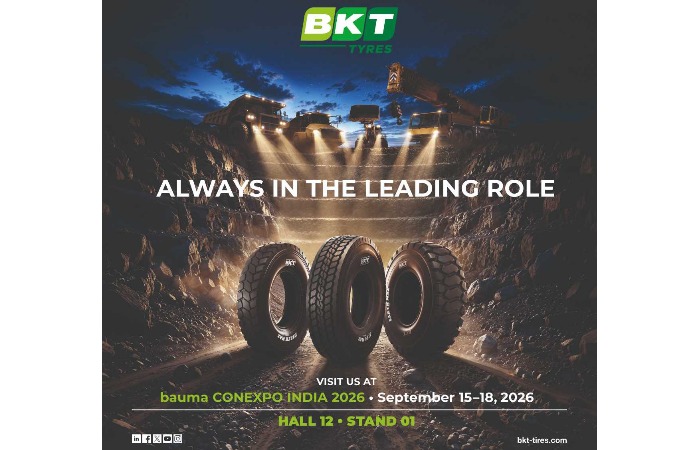
BKT to Showcase Advanced Off-Highway Tyres at Bauma ConExpo
Balkrishna Industries Ltd (BKT) will showcase its latest off-highway tyre solutions at Bauma ConExpo India 2026, scheduled from September 15-18 a...