
Schedule a Call Back
India Builds, China Supplies?
2026-02-02
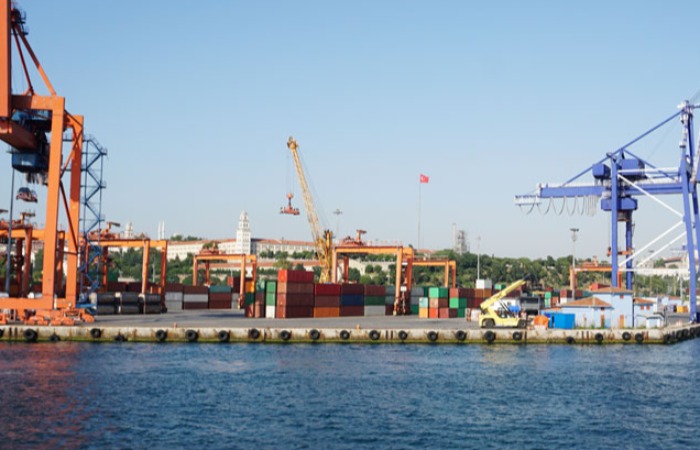
India’s construction equipment (CE) industry is at a defining moment. Infrastructure spending remains robust, driven by highways, metros, mining, industrial corridors and energy projects. Yet, even as demand scales up, domestic equipment manufacturers are under growing pressure from low-priced imports—particularly from China—raising uncomfortable questions about whether India’s infrastructure boom is strengthening local manufacturing or subsidising overseas suppliers.
Valued at roughly $9 to 10 billion, the Indian CE market should be a showcase for indigenous capability under Make in India and Atmanirbhar Bharat. Instead, industry leaders warn that price distortion, weak enforcement and policy loopholes are undermining domestic OEMs, even as they invest in localisation, cleaner engines and advanced manufacturing.
Price erosion and market share losses
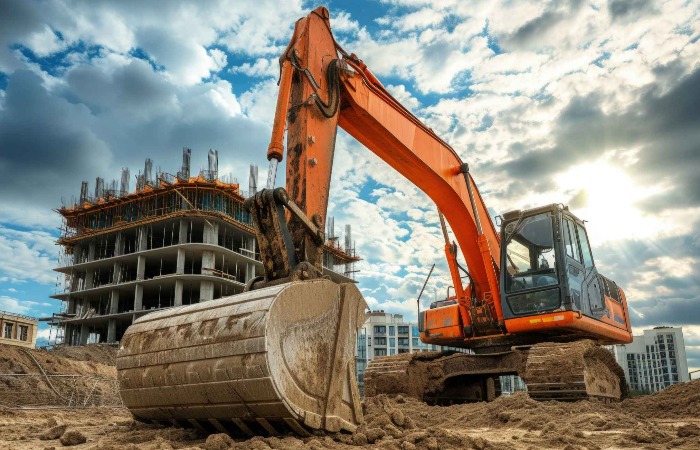
The concern gained prominence when Sandeep Singh, Managing Director, Tata Hitachi Construction Machinery, highlighted the sharp rise in Chinese penetration. Chinese OEMs now account for an estimated 20 to 22 per cent of the excavator market, up from less than 10 per cent five years ago. Singh warned that similar patterns are emerging across other equipment categories.
Industry veteran Anand Sundaresan believes the damage is already visible. “In the 23-tonne excavator segment and below, prices of imported machines have dropped so sharply that several established Indian OEMs have lost significant market share,” he says. Tata Hitachi and other domestic manufacturers have been among the most affected.
The impact is concentrated in price-sensitive tier 2 and tier 3 contractor markets, where purchasing decisions are driven almost entirely by upfront cost. “In these segments, buyers place very little importance on lifecycle cost, after-sales support or long-term reliability,” Sundaresan notes.
Structural disadvantages for Indian OEMs
According to Sundaresan, Indian OEMs are not losing ground due to inefficiency, but because of structural cost disadvantages. Higher steel prices, higher fabrication costs and heavy dependence on imported hydraulic components make it nearly impossible to match Chinese pricing. “Even when machines are assembled in India using imported components, they still end up more expensive than fully imported equipment,” he explains.
The rental market further intensifies this pressure. Rental companies favour cheaper machines because entry costs are lower and break-even periods are shorter. Over time, this influences market pricing benchmarks and residual values. “Rental players indirectly pull prices down across the industry,” Sundaresan says, hurting OEMs who invest in manufacturing depth and long-term support.
Anti-dumping: intent without impact
Policy intervention, particularly anti-dumping duties, has delivered mixed results. Recent action in large cranes has been welcomed by domestic manufacturers, who argue that predatory pricing had stalled local production for years.
Sorab Agarwal, Executive Director, Action Construction Equipment (ACE), notes that demand is shifting toward higher-capacity cranes as projects grow larger and more complex. “Applications today span metros, bullet trains, nuclear plants, refineries and large cement and steel facilities. These require higher-capacity cranes, and demand is clearly moving in that direction,” he says.
However, Sundaresan remains sceptical about the broader framework.
“Anti-dumping exists on paper, but offers little real protection,” he argues. Coverage across CE categories is limited, and duties typically apply only to fully built units. “If kits or sub-assemblies are imported and assembled locally, the impact of anti-dumping is largely neutralised.”
Classification loopholes further dilute enforcement. Minor changes in model or configuration often allow imports to bypass duties altogether. Another major blind spot, Sundaresan warns, is used equipment imports. “Controls are weak. Used machines, often imported with minimal checks, end up competing directly with brand-new Indian equipment.”
Signs of revival
Despite these challenges, domestic manufacturers are not standing still. BEML’s re-entry into the CE space following restructuring signals renewed confidence. The company has reorganised into 11 strategic business units and announced a capital expenditure plan exceeding Rs 900 crore to modernise facilities and expand capacity, targeting a market estimated at Rs 45,000 crore.
The downstream benefits of domestic manufacturing are significant—stronger ancillaries, skilled employment, faster service response and better uptime. These advantages are becoming more relevant as machines grow larger and more complex.
This shift is clearly visible in the crane rental market. Rishi Sanghvi, Managing Director, Sanghvi Movers, India’s largest crane rental company, sees the current moment as transformational. “For decades, our aspiration has been to see large cranes manufactured in India,” he says. “Today, Indian infrastructure is increasingly being built by Indian companies using Indian equipment. This is not just about replacing imports, but about building long-term capability.”
He adds that partnerships between OEMs and rental companies are accelerating acceptance of Indian-made large cranes on demanding job sites, helping manufacturers validate performance and improve products faster.
Counter-view
Sunil Jain, Senior Consultant (SAARC), Sinoboom Intelligent Equipment, offers a more nuanced perspective. Sinoboom, a Chinese-headquartered access equipment manufacturer, has close to 400 machines operating in India. Jain notes that Indian customers are becoming more discerning. “The first question customers ask is not where the machine comes from, but whether it meets performance and safety expectations,” he says.
Adoption, he adds, is cautious. Customers want to see machines in operation, assess uptime and evaluate service capability before scaling up. While Sinoboom currently imports all its equipment, local manufacturing is under evaluation. “Such initiatives take time. Building the right team, service structure and India-specific setup is critical,” Jain explains.
On anti-dumping, Jain takes a process-driven view. He emphasises that duties are imposed after detailed investigations and due process. “From an industry standpoint, regulatory clarity matters more than the direction of the decision itself,” he says.
What’s at stake
Indian OEMs are investing heavily in CE V-compliant engines, automation, digital monitoring and AI-enabled safety systems. What they seek, Sundaresan stresses, is not protection from competition, but protection from distortion. He argues that meaningful reform must include stricter controls on used machinery imports, stronger safety and durability standards, incentives for component manufacturing and procurement norms that reward quality and lifecycle cost—not just L1 pricing.
As infrastructure spending accelerates, the stakes are rising. If unfair practices persist unchecked, India risks hollowing out its domestic construction equipment industry just as it reaches technological maturity. For a sector that underpins the nation’s infrastructure ambitions, ensuring a genuinely level playing field is no longer optional—it is strategic.
“Anti-dumping exists on paper, but offers little real protection.”

Anand Sundaresan, an industry veteran with over 47 years of experience in the engineering industry, shares insights on how low-cost Chinese construction equipment is impacting Indian OEMs.
How do you see the rise of low-cost Chinese equipment affecting the growth of Indian construction equipment manufacturers?
Cheap imports—whether from China or elsewhere—have affected some Indian equipment manufacturers very badly. If you take the case of excavators in the 23-tonne class and below, prices of imported machines have dropped so sharply that several established Indian OEMs have lost significant market share. Companies like Tata Hitachi and other original manufacturers have been badly impacted.
This impact is most visible in the price-sensitive contractor segment, especially Tier 2 and Tier 3 markets, where capex decisions are driven purely by upfront price, not by lifecycle cost. In these segments, buyers place very little importance on after-sales service, spare parts availability, or long-term reliability.
Another key challenge is that Indian OEMs struggle to match Chinese prices due to higher steel costs, higher fabrication costs, and limited access to locally manufactured hydraulic components. We also face several regulatory and structural restrictions.
Even when machines are manufactured in India, and even if certain components are imported from China to keep costs low, locally manufactured or globally assembled machines still work out to be more expensive than fully imported machines.
The situation is further complicated by the rental market. Rental players prefer cheaper equipment because the entry cost is low, and their break-even period is shorter. This hurts Indian OEMs because rental players also influence market pricing norms and residual values, further pulling prices down.
Do you believe the current anti-dumping measures and customs oversight are sufficient to create a level playing field? Are there gaps that still allow unfair competition?
Frankly, there are not many construction equipment categories covered under anti-dumping duties today. I understand that some measures are being discussed—for example, in certain crane segments—but overall, the coverage is very limited.
Another major issue is how anti-dumping duties are structured. From what I understand, anti-dumping duties apply only to fully built units, not to components. So, if someone imports kits or sub-assemblies and assembles the machine locally, the impact of anti-dumping duty is largely neutralised. This makes the policy ineffective in practice.
Additionally, there are classification loopholes. By slightly changing the model, capacity, or configuration, importers can often bypass duties altogether. The current anti-dumping framework is not mature enough, and as a result, it does not really help Indian OEMs in a meaningful way.
Another serious concern is the import of second-hand equipment. Controls in this area are very weak. It is not always clear whether anti-dumping duties apply to used machinery, or what checks are enforced. Used machines—often imported with minimal inspection or compliance checks—end up competing directly with brand-new Indian equipment. Many players find ways to bypass norms, and this badly affects domestic manufacturers.
Industry associations need to work much more closely with the government to educate policymakers about how used machinery imports distort the market. Overall, while the anti-dumping policy exists, it requires far more scrutiny, structural changes, and maturity to actually create a level playing field.
What strategies should Indian OEMs adopt to counter low-cost imports?
This is extremely difficult and requires significant financial strength. In India, manufacturers do not get anything free. If you want to set up a factory, you have to buy land at market rates, invest heavily in infrastructure, and bear high capital costs. Subsidies are minimal, and even where they exist, they are often in locations that lack supporting infrastructure, making manufacturing inefficient.
One possible area Indian OEMs can explore is lifecycle cost-based offerings. However, this also carries risks. The guidelines and parameters must be very clearly defined with contractors, and once the machine is deployed on-site, controlling usage and proving responsibility becomes difficult.
Factors such as availability, after-sales service, spare parts support, resale value, and uptime become critical. OEMs can position themselves around total cost of ownership (TCO), but contracts must be watertight. Otherwise, disputes around “who is right and who is wrong” consume time and resources that OEMs simply don’t have.
Another fundamental issue is that India’s component manufacturing ecosystem is incomplete. Most hydraulic components and critical systems are still imported. Take the excavator segment as an example. India sells around 30,000 excavators annually, or about 3,000 units per month. Yet even something as basic as the track chain is not manufactured locally—every OEM imports it.
Some companies are now planning to set up component manufacturing facilities in India, but even then, competitiveness remains a challenge because special-grade steel and processing costs in India are very high.
To address this, the component ecosystem must be strengthened significantly. The government should consider subsidies and incentives for setting up component manufacturing, including incentives for exports, and mechanisms to manage price volatility of imported raw materials.
OEMs can also explore customisation, rather than producing completely generic machines. This may work well in areas like concrete plants or asphalt plants, but it is not always feasible for standard equipment categories.
Another area where Indian OEMs are already making progress is strengthening the aftermarket. This includes digital monitoring of machines, better spare parts logistics, predictive maintenance, and service transparency. All of this directly contributes to lower lifecycle costs and allows OEMs to offer performance guarantees.
Equally important is engaging with the government to push for:
• Stricter norms on used machinery imports
• Stronger safety, emission and durability standards
• Quality-based public procurement norms
Government tenders should not be decided purely on L1 pricing. Quality, lifecycle cost, and durability must be factored into evaluation criteria. This would significantly benefit Indian-origin manufacturers.
Should Indian OEMs look more aggressively at exports?
Indian OEMs must look at export markets such as Africa, the Middle East, and Southeast Asia. Some companies, like JCB, already export to over 100 countries, proving that it is possible. However, not all OEMs enjoy the same freedom. Several European OEMs operating in India still impose territorial restrictions, limiting where Indian-made equipment can be sold. Unless more markets are opened up for Indian manufacturing bases, it will be very difficult for many OEMs to scale. Exporting with cost discipline and quality competitiveness is one of the most effective ways to strengthen the industry.


Subscribe Now
Subscribe to our Newsletter & Stay updated
RECENT POSTS
Popular Tags
Folliow us
Related Stories
Data—not guesswork—drives equipment decisions
Barad Sharma, CEO, Amberg Engineering, speaks on the evolving global tunnelling and underground infrastructure market, and where Amberg se...
Compact Power
India’s construction landscape is rapidly evolving, powered by large-scale government programmes, urban renewal initiatives and a renewed push ...
Union Budget 2026–27 Marks a Milestone for Construction Equipment Manufacturing
The Indian Construction Equipment Manufacturers Association (ICEMA) congratulates the Government of India on the announcement of a forward...