



Schedule a Call Back
Drive Under Pressure
2026-03-02
Drive is easy to celebrate in an anniversary issue. The harder question is what sustains it when the environment is not cooperating.
The last 18 months have tested Indian contractors in ways that don't always make headlines. Infrastructure spending has held firm — the pipeline is real — but domestic equipment volumes in core segments like excavators and backhoe loaders have slipped by roughly 2 per cent. Project timelines are under pressure. Input costs have not eased as quickly as everyone hoped. And the gap between contractors who are adapting their operating model and those who are not is starting to show clearly on site.
In this context, drive means something specific. It means getting more output from machines you already own rather than waiting for capital to free up. It means rethinking logistics — because in remote hill corridors, a truck shortage or a quarry ban can stall a project faster than any equipment failure. And it means being willing to change how work is planned, not just how it is executed.
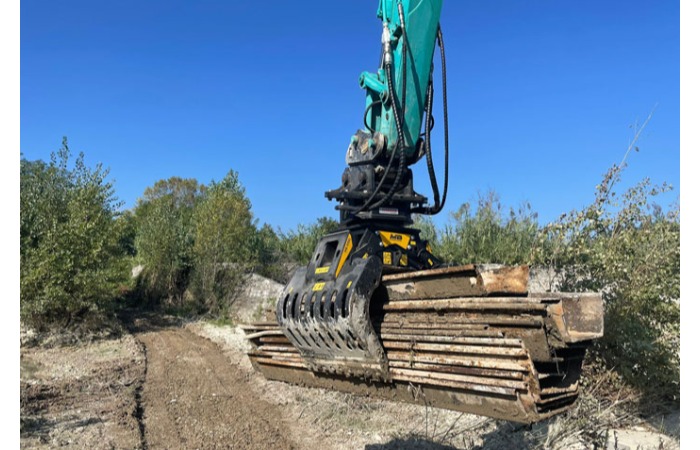
What we see at MB Crusher, across sites from Kashmir to Kanyakumari, is that the contractors driving the most consistent progress are the ones who have decentralised their material processing. They are not waiting for aggregate to arrive. They are producing it on-site — from the rock they excavate, or from the demolition waste already present. One excavator, one trained operator, one crusher bucket. No plant setup, no additional labour camp, no dependence on a supply chain that can break anywhere along the way.
That is what drive looks like on the ground. Not ambition on a slide deck — execution under constraint.
Disruption: The part nobody planned for
The disruption shaping this industry right now is not one event. It is a sequence of pressures hitting simultaneously. Global tariff realignments are pushing equipment manufacturers and component suppliers to rethink sourcing. Supply chains that looked efficient three years ago now carry risks that were not in the original calculation. Steel prices have remained volatile. And Indian contractors working in remote regions — the Northeast, Himachal, Jammu and Kashmir — face logistics costs that can make or break project economics regardless of what happens at the macro level.
There is also a regulatory disruption underway that the industry has not fully absorbed. Construction and demolition waste management rules have been tightening progressively since 2016, and enforcement in urban centres is finally becoming real. In cities like Delhi and Mumbai, disposing of demolition debris the old way — loading it onto trucks and sending it to a dump yard — is no longer just expensive. It is increasingly non-compliant. Contractors are being asked to show how waste is being managed, not just moved.
Here is the thing about disruption, though: it doesn't just create problems. It creates pressure to adopt solutions that should have been adopted earlier. On-site crushing and screening — turning demolition concrete into reusable sub-base, or processing excavated rock directly into road aggregate — is not a new idea. But the economic case for it has never been stronger than it is right now, precisely because logistics costs are high, waste disposal rules are tightening, and project timelines leave no room for material delays.
Disruption, handled right, accelerates adoption of what should have been standard practice years ago.
Digitisation: Practical before it is strategic
Digitisation in construction equipment is a term that often gets discussed at a level of abstraction that makes it hard to connect to actual job sites. So let me anchor it in what matters.
The most pressing digital need on an Indian job site today is not artificial intelligence. It is visibility. Knowing whether a machine is operating correctly, whether a wear component is approaching the end of its service life, and whether that information reaches someone who can act on it — before the machine goes down, not after. On a remote hill project where the nearest service facility is four hours away, unplanned downtime is not just an inconvenience. It is a schedule risk that compounds through the entire project.
At MB Crusher, we are focusing on monitoring of operating hours and wear components on our attachments. The objective is to move from reactive service — where a problem is identified after it has already caused downtime — to predictive service, where intervention is planned before failure occurs. For customers working in geographies where service access is genuinely difficult, this changes the risk profile of using our equipment in those locations.
What the next phase requires
India's infrastructure supercycle is not a forecast anymore. It is happening. The question is whether the equipment industry — suppliers, contractors, and policymakers together — can match the pace and scale of what the country is building.
Three things need to come together. Contractors must be willing to rethink how projects are planned — integrating material processing, waste management, and machine utilisation into the execution model from day one, not as an afterthought. Equipment suppliers must close the gap between what they promise in a showroom and what they can actually deliver in service in Arunachal Pradesh or in a congested urban redevelopment site in Delhi. And policy must move faster to provide workable frameworks for on-site recycling, because the economics already justify it and only the regulatory uncertainty holds contractors back.
The future of Indian construction will not be built at central plants. It will be built at the job site — with smarter machines, better data, and the confidence to process material where it is generated rather than hauling it somewhere else and hoping the supply chain holds.
Drive. Disruption. Digitisation. They are not three separate conversations. On the best-run Indian job sites today, they are the same conversation — happening at the same time, between the same people, in front of a machine that is turning waste into usable aggregate and giving one operator the output of a full crushing plant crew.
ABOUT THE AUTHOR:
Piero Guizzetti, CEO, MB Crusher India


Subscribe Now
Subscribe to our Newsletter & Stay updated
RECENT POSTS
Popular Tags
Folliow us
Related Stories
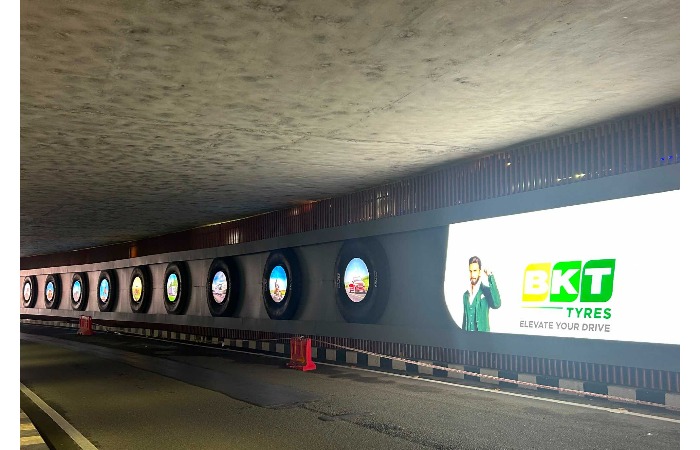
BKT Unveils Immersive Tyre Installation at Mumbai Airport
Balkrishna Industries (BKT), a global off-highway tyre leader with a growing presence in India's on-highway tyre market, has unveiled a distincti...
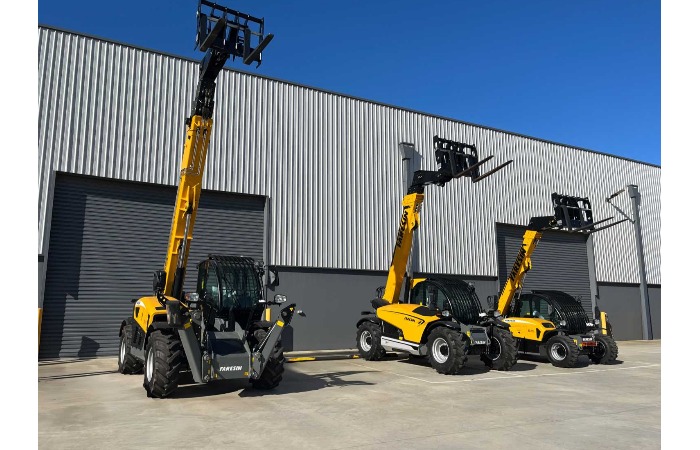
Faresin Appoints Haulotte as Australia Telehandler Distributor
Faresin Industries has appointed Haulotte Australia as the exclusive distributor of its telehandlers for the construction and equipment rental se...
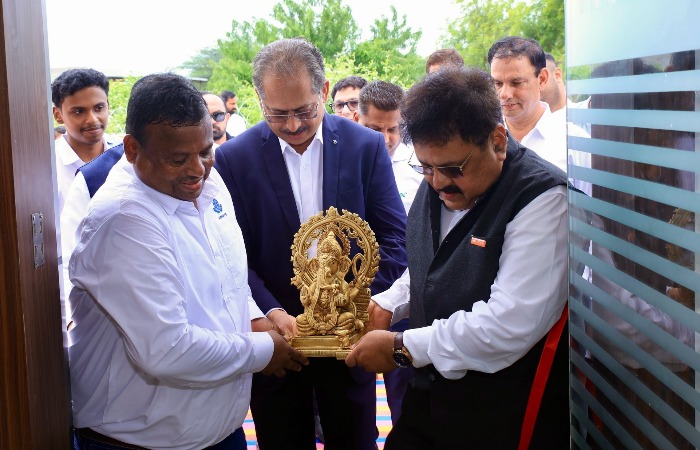
Tata Hitachi Inaugurates Regional Sales Office in Jaipur
Tata Hitachi has inaugurated its new Regional Sales Office in Jaipur, marking a step towards strengthening its presence and customer engagement i...