


Schedule a Call Back
Disrupt. Digitise. Drive.
2026-03-02

India’s construction equipment (CE) industry began 2026 on a cautious note, with sales declining 12.6 per cent year-to-date in January, according to the Federation of Automobile Dealers Associations (FADA). Retail volumes dropped to 74,029 units, down from 79,316 units in 2024, reflecting slower project mobilisation, dealer inventory correction, and cautious contractor sentiment. Despite strong growth in passenger vehicles, tractors and commercial vehicles, construction equipment demand remained subdued, underlining the sector’s close dependence on project execution cycles.
Market leader JCB India retained a commanding share, while Action Construction Equipment (ACE), Ajax Engineering, Escorts Kubota, CASE Construction Equipment and Tata Hitachi Construction Machinery continued to anchor the competitive landscape. Yet, even these established players faced volume pressure, particularly in high-volume categories such as backhoe loaders and excavators.
This slowdown signals not a structural decline but a cyclical pause—one that underscores the deeper transformation underway. The construction equipment industry is no longer driven solely by project awards and capital spending. It is being reshaped by three powerful forces: Drive, Disruption, and Digitisation. These forces are redefining not only how equipment is designed and deployed but also how infrastructure itself is conceived and delivered.
This anniversary edition captures an industry at a critical inflection point—where resilience, innovation and intelligence are converging to define the next phase of growth.
Drive: Determination to deliver more with less
Drive has always been a defining characteristic of India’s construction equipment industry. But today, it is no longer measured only by production capacity or fleet size. It is defined by efficiency, adaptability, and the ability to extract maximum value from every asset.
Contractors across India are increasingly focused on optimising existing equipment rather than expanding fleets indiscriminately. This shift reflects tighter financial discipline, evolving project economics, and growing awareness of lifecycle value. As Sameer Malhotra, Director and CEO, Shriram Automall India, observes, the industry’s focus is shifting from asset accumulation to asset optimisation. “The real drive today is not about buying more machines—it is about deploying the right machine, for the right duration, at the right value,” he explains.
Similarly, the rental ecosystem has emerged as a critical enabler of flexibility and capital efficiency. According to Satin Sachdeva, Founder and Secretary General, Construction Equipment Rental Association, renting allows contractors to scale fleets dynamically while preserving working capital and reducing financial risk. This asset-light approach is becoming increasingly central to India’s infrastructure execution model.
At the same time, engineering innovation continues to push productivity boundaries. Manish Mathur, CEO – Cranes, Action Construction Equipment, emphasises that equipment design today is shaped as much by lifecycle efficiency and total cost of ownership as by mechanical capability. Fuel efficiency, serviceability, and uptime are now decisive competitive differentiators.

On the ground, this drive manifests in practical operational shifts. Contractors are decentralising material processing, integrating waste recycling, and optimising equipment utilisation to maintain progress despite logistical and cost constraints. As Piero Guizzetti, CEO, MB Crusher India, notes, “The contractors driving the most consistent progress are the ones who have decentralised their material processing… producing aggregate on-site rather than relying on fragile supply chains.”
This relentless focus on productivity reflects a fundamental truth: in today’s environment, competitive advantage belongs not to those who own the most equipment, but to those who use it most intelligently.
Disruption: Navigating structural shifts in a volatile world
If drive is the internal force shaping the industry, disruption is the external force redefining its operating environment.
Global trade realignments, tariff volatility, supply chain disruptions, and commodity price fluctuations have fundamentally altered the economics of construction equipment manufacturing and procurement. Manufacturers must now design supply chains that prioritise resilience alongside cost efficiency.
Sanjay Koul, Chairman and Managing Director, Timken India, underscores the magnitude of this shift. “Traditional operating models that rely heavily on manual oversight or reactive problem-solving are no longer sufficient. Digitisation and preventive controls are essential to maintain performance and continuity in an uncertain environment.”
Similarly, Ramesh Palagiri, MD and CEO, Wirtgen India, highlights the growing importance of localisation and supply chain diversification. Companies are strengthening domestic sourcing, expanding local manufacturing, and enhancing service ecosystems to mitigate global disruptions.
These disruptions extend beyond manufacturing to contractor behaviour. Extended equipment lead times, cost escalation, and financial uncertainty are driving greater reliance on rentals, pre-owned equipment, and flexible financing models.
At the same time, regulatory disruptions—including emission norms and waste management requirements—are accelerating technological adoption. Environmental compliance is no longer optional; it is integral to project eligibility and financing.
Disruption, however, is not purely a challenge. It is also a catalyst. It is forcing companies to innovate, strengthen resilience, and rethink traditional business models.
As Kalpesh Soni, Vice President, Conmat Heavy Industries, explains, strengthening domestic supply chains and developing indigenous technologies are essential strategies to maintain competitiveness and reduce exposure to global volatility.
The companies that succeed will be those that treat disruption not as a threat but as an opportunity to evolve.
Digitisation: New backbone of productivity and performance
While drive fuels ambition and disruption forces adaptation, digitisation is the transformative force enabling sustainable growth. Construction equipment is rapidly evolving from mechanical assets into intelligent, connected systems capable of generating and analysing real-time data.
Telematics platforms now provide comprehensive visibility into machine health, utilisation, fuel consumption, and operator behaviour. This data enables predictive maintenance, optimised fleet deployment, and improved operational efficiency.
Siddharth Chaturvedi, Head Marketing, Tata Hitachi Construction Machinery, explains how digital platforms such as ConSite and InSite are enabling predictive maintenance and data-driven decision-making, significantly improving uptime and reducing operating costs.
Similarly, Caterpillar’s connected jobsite ecosystem, which integrates millions of connected assets, demonstrates the scale and impact of digital transformation. These systems use AI-driven analytics to predict equipment failures, optimise utilisation, and enhance safety.
Digitisation is also transforming equipment design and performance. Sensors, automation systems, and intelligent controls enable machines to optimise operations autonomously, improving efficiency and reducing human error.
At AJAX Engineering, digital technologies such as load cell systems and AI-enabled analytics are improving batching accuracy, reducing material wastage, and enhancing construction quality.
Similarly, Dynapac’s integrated digital ecosystem provides real-time performance insights, enabling predictive maintenance and optimised fleet management.
These innovations represent a fundamental shift—from machines that perform tasks to systems that continuously improve performance.
Connected jobsites
Digitisation is not limited to individual machines. It is transforming entire jobsites into connected ecosystems. Connected equipment enables real-time monitoring of project progress, machine utilisation, and operational efficiency. This visibility allows contractors to identify inefficiencies, optimise resource allocation, and improve project outcomes.
SP Rajan, Vice President and Head – Competency Center RBF SBG, L&T Construction, emphasises that digital visibility has become essential for project execution. Real-time monitoring of machine performance enables better planning, improved productivity, and enhanced safety.
Government policy is also accelerating digital adoption. The Ministry of Road Transport and Highways has mandated the use of automated machine-guided construction systems, including GPS-guided graders and intelligent compactors, to improve quality and efficiency in highway projects.
These technologies are transforming construction from a reactive process to a predictive, data-driven discipline.
New business models
Digitisation is also enabling new business models that enhance flexibility and sustainability. The pre-owned equipment market, once considered secondary, is now a strategic growth engine. Digital platforms enable transparent price discovery, efficient asset redeployment, and improved capital efficiency.
Shriram Automall India has facilitated transactions involving over 72,000 pre-owned equipment units, highlighting the scale and importance of this ecosystem. Similarly, digital rental platforms are improving fleet utilisation, reducing idle time, and enabling dynamic deployment. These models support circular economy principles by extending asset lifecycles and reducing environmental impact.
Sustainability is emerging as a central pillar of construction equipment innovation.
Emission regulations, energy efficiency requirements, and environmental considerations are driving the development of cleaner, more efficient machines.
Advanced technologies such as intelligent compaction systems, fuel-efficient engines, and alternative fuel compatibility are reducing environmental impact while improving productivity.
Digitisation plays a critical role in enabling sustainability by optimising fuel consumption, reducing material wastage, and improving resource efficiency.
India’s strategic moment
India’s infrastructure pipeline remains one of the largest in the world, encompassing highways, railways, ports, airports, urban infrastructure, and renewable energy projects. This sustained investment provides a strong foundation for long-term growth in the construction equipment industry.
However, future leadership will depend not only on scale but on technological capability, operational intelligence, and strategic adaptability. Companies must integrate digital intelligence into equipment design, strengthen supply chain resilience, and develop innovative business models.
Road ahead
The construction equipment industry stands at a defining moment. Drive continues to push boundaries, forcing companies to maximise efficiency and innovation. Disruption is reshaping global supply chains, procurement strategies, and business models. Digitisation is transforming machines into intelligent systems capable of delivering unprecedented productivity, safety, and sustainability.
One conclusion is clear: the future of construction equipment will not be defined by mechanical strength alone. It will be defined by intelligence, connectivity, resilience, and adaptability. Companies that embrace these forces will not only survive disruption—they will lead the transformation. The machines building India’s future are no longer just tools. They are intelligent partners in the nation’s journey toward infrastructure excellence.


Subscribe Now
Subscribe to our Newsletter & Stay updated
RECENT POSTS
Popular Tags
Folliow us
Related Stories
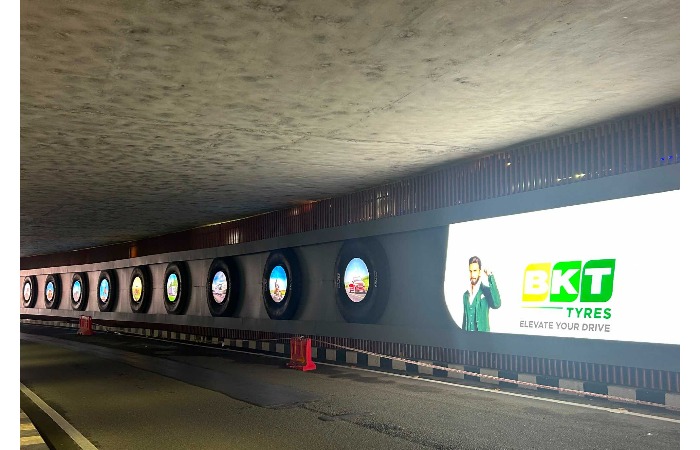
BKT Unveils Immersive Tyre Installation at Mumbai Airport
Balkrishna Industries (BKT), a global off-highway tyre leader with a growing presence in India's on-highway tyre market, has unveiled a distincti...
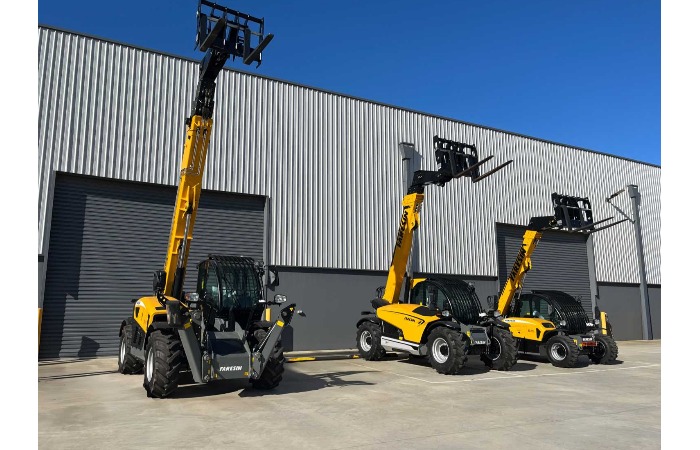
Faresin Appoints Haulotte as Australia Telehandler Distributor
Faresin Industries has appointed Haulotte Australia as the exclusive distributor of its telehandlers for the construction and equipment rental se...
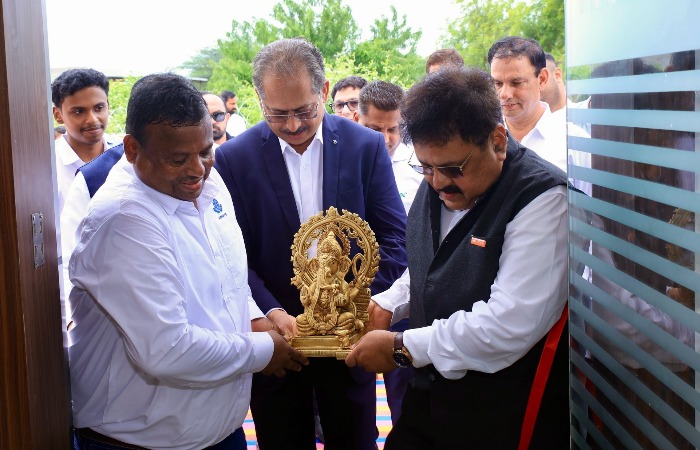
Tata Hitachi Inaugurates Regional Sales Office in Jaipur
Tata Hitachi has inaugurated its new Regional Sales Office in Jaipur, marking a step towards strengthening its presence and customer engagement i...