





Schedule a Call Back
Gujarat Pushes Biogas Growth With 193 Operational Units
2026-04-07
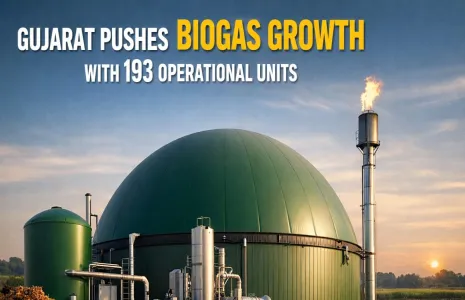 Gujarat has operationalised 193 biogas plants across the state and is planning to add 60 more units as part of a broader push to scale up clean and sustainable energy solutions. The existing plants, established under various government-supported schemes, process organic waste including cattle dung and agricultural residue to produce biogas and a nutrient-rich slurry. The output is mainly used for cooking and other energy needs in rural and semi-urban communities, while also improving local waste management practices.
The Gujarat Energy Development Agency (GEDA) is leading the initiative and is providing financial assistance and technical support to encourage wider adoption. State authorities have allocated funding to support the installation of additional units with priority given to institutions such as gaushalas, hostels and community centres where organic waste availability is high. The programme aims to strengthen decentralised energy production and promote local self-reliance in meeting basic energy needs.
The expansion is expected to lower greenhouse gas emissions and to provide a steady supply of organic fertiliser as a by-product, enhancing agricultural outputs at the local level. By scaling up biogas infrastructure, the state is contributing to national objectives of increasing the share of renewable energy and promoting cleaner cooking alternatives. The initiative also supports circular economy principles by converting waste streams into useful energy and input materials for farming.
Realising the full potential of the programme will depend on sustained community engagement, reliable feedstock supply chains and regular maintenance of units to ensure long-term performance. Capacity building, training and monitoring mechanisms are being emphasised to increase adoption rates and to address operational challenges. If implemented at scale, the model could reinforce energy security in smaller towns and villages while offering co-benefits in sanitation and rural livelihoods. Plans include collaboration with local bodies to support distribution and upkeep of units.


Subscribe Now
Subscribe to our Newsletter & Stay updated
RECENT POSTS
Popular Tags
Folliow us