





Schedule a Call Back
Hydraulic Excavators Market to Reach $81.7 Bn by 2033
2026-04-30
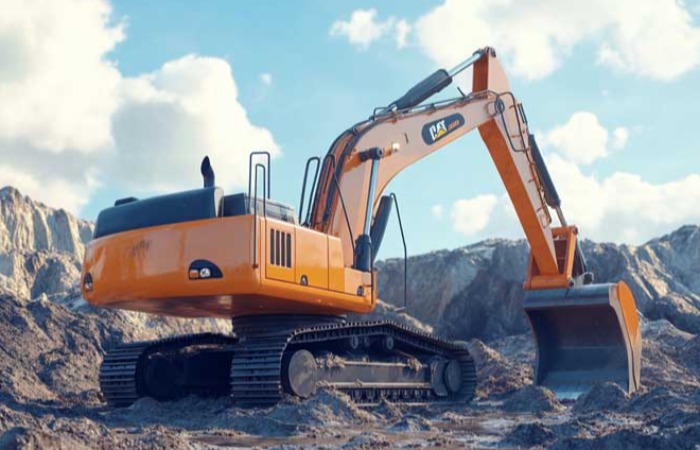
The hydraulic excavators market represents a critical segment within the global construction and heavy equipment industry. These machines, powered by advanced hydraulic systems, are widely used for digging, material handling, demolition, and mining operations. Their versatility, efficiency, and adaptability across applications, from urban infrastructure to large-scale mining, have positioned them as indispensable assets in modern development projects.
According to Research Intelo, the global hydraulic excavators market size reached $51.6 billion in 2024, reflecting strong demand across infrastructure and industrial sectors. The market is projected to grow at a CAGR of 5.3 per cent from 2025 to 2033, reaching an estimated $81.7 billion by 2033.
This growth trajectory underscores the structural reliance of global construction and mining industries on high-performance excavation equipment, supported by ongoing urbanization and industrial expansion.
Growth market
Surge in Global Infrastructure Development: Governments and private sector players are investing heavily in large-scale projects such as highways, rail networks, airports, and urban redevelopment initiatives. These developments require efficient earthmoving solutions, positioning excavators as essential equipment across project lifecycles.
Rising demand for advanced machinery: The need for equipment capable of operating in complex terrains and extreme conditions is accelerating the adoption of technologically enhanced machines. Integration of GPS, telematics, and automation features is improving precision, productivity, and safety across construction sites.
Expansion of the mining sector: Increasing global demand for minerals and raw materials is driving investments in mining operations. Excavation equipment, known for its durability and high digging capacity, is widely deployed in both surface and underground mining to improve operational efficiency.
Shift toward sustainability and low-emission equipment: The growing emphasis on environmental sustainability is encouraging manufacturers to develop energy-efficient machinery with reduced emissions. Hybrid and electric variants are gaining traction, particularly in regions with stringent environmental regulations.
Growth in agricultural and forestry applications: Mechanisation in agriculture and forestry is increasing the adoption of excavators for land clearing, trenching, and material handling. The integration of specialised attachments is further expanding their utility across non-construction applications.
Technology reshaping hydraulic excavators
The market is undergoing a significant technological transformation with the integration of IoT-enabled monitoring systems, semi-autonomous functionalities, and AI-driven predictive maintenance. These innovations enable real-time performance tracking, optimize fuel efficiency, and reduce operational downtime.
Electrification remains a key trend, with manufacturers introducing hybrid and fully electric models to meet evolving emission standards. These machines are particularly suited for urban environments where noise and emission control are critical.
The hydraulic excavators’ market can be segmented based on type, application, and end-use industry:
• By type: Crawler excavators, wheeled excavators, and mini/compact excavators
• By application: Construction, mining, forestry, and agriculture
• By end-use industry: Infrastructure development, residential construction, commercial construction, and industrial projects
Crawler excavators account for the largest market share due to their superior stability and performance in heavy-duty operations. Meanwhile, compact excavators are witnessing increasing demand in urban and residential projects due to their maneuverability and space efficiency.
Asia Pacific remains the largest and fastest-growing regional market, accounting for over 42% of global revenue in 2024. This dominance is driven by rapid urbanization, large-scale infrastructure investments, and strong demand from construction and mining sectors in countries such as China, India, and Japan. China continues to lead due to extensive infrastructure programs, while India is emerging as a high-growth market supported by government-led development initiatives.
North America represents the second-largest market, valued at USD 10.8 billion in 2024. Growth in this region is supported by infrastructure modernization projects, increasing adoption of advanced technologies, and strong demand from construction and industrial sectors. The shift toward low-emission machinery is also accelerating the adoption of hybrid and electric models.
Europe holds a significant share, with a market size of $ 9.7 billion in 2024. The region is characterized by stringent environmental regulations and a strong focus on sustainable construction practices. Investments in renewable energy, smart cities, and infrastructure upgrades are driving steady demand for advanced excavation equipment.
Overall, regional dynamics indicate Asia Pacific’s continued dominance, while North America and Europe focus on technological advancement and sustainability transitions.
The competitive landscape is characterised by the presence of global manufacturers focusing on innovation, product differentiation, and strategic collaborations. Key players include: Caterpillar, Komatsu, Hitachi Construction Machinery, Volvo CE and Hyundai CE.
These companies are investing in research and development to introduce fuel-efficient, low-emission, and digitally integrated machinery, strengthening their competitive positioning in the global market.
Challenges
Despite positive growth prospects, the market faces several challenges. High initial investment and maintenance costs remain key barriers, particularly for small and medium-sized enterprises. Additionally, volatility in raw material prices and supply chain disruptions can affect production costs and profitability.
Regulatory complexities related to emissions, safety, and sustainability further increase compliance costs for manufacturers. Addressing these challenges requires continuous innovation, cost optimisation strategies, and efficient supply chain management.
• Sustainable equipment development: Increasing focus on electric & hybrid excavators.
• Digital integration: Growing adoption of telematics and fleet management solutions.
• Automation: Transition toward autonomous and remote-controlled machinery.
• Rental market growth: Rising preference for equipment rental over ownership.
These trends highlight a broader shift toward intelligent, sustainable, and cost-efficient construction solutions.
Road ahead
The hydraulic excavators’ market is set for steady expansion, driven by infrastructure growth, technological advancements, and evolving industry requirements. As the market progresses from $51.6 billion in 2024 to $81.7 billion by 2033, innovation and sustainability will remain central to industry evolution.
In the long term, the convergence of digital technologies, automation, and eco-friendly solutions is expected to redefine the competitive landscape, positioning excavators as smart, efficient, and sustainable assets within the global construction ecosystem.


Subscribe Now
Subscribe to our Newsletter & Stay updated
RECENT POSTS
Popular Tags
Folliow us
Related Stories

TrucksUp Celebrates Truck Drivers’ Role in India’s Growth
TrucksUp has celebrated July 19 as TrucksUp Drivers’ Day with a special appreciation initiative across its network, recognising the contributio...

GS Caltex India Refreshes Kixx Brand Identity in India
GS Caltex India has unveiled the refreshed global identity of its flagship lubricant brand, Kixx, in India, marking a new phase in the brand’s ...

Smiley Monroe Invests Rs 6 Crore in Hosur Facility Expansion
Smiley Monroe has expanded its India operations with a new 24,000 sq ft manufacturing facility in Hosur, Tamil Nadu, backed by an investment of R...