Filters at the Core
As India accelerates its infrastructure ambitions with massive investments in highways, mining, railways, ports, airports and urban infrastructure, construction equipment is being pushed harder than ever before. Excavators, wheel loaders, cranes, motor graders and mining equipment are operating in some of the world’s harshest conditions — from dusty quarries and mines to humid coastal projects and high-temperature road construction sites.
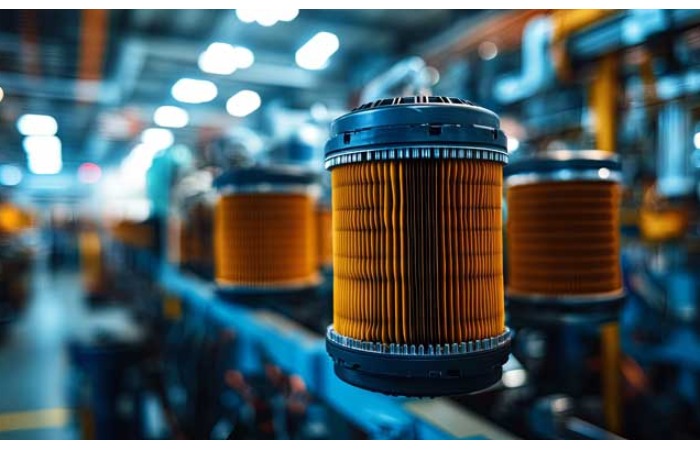
In such demanding environments, filtration systems have emerged as one of the most critical yet underappreciated components in construction equipment. Whether it is air, fuel, oil, hydraulic or cabin filtration, modern filters are no longer just consumables; they are becoming strategic enablers of machine uptime, fuel efficiency, emissions control and lifecycle cost optimisation.
The growing sophistication of construction equipment, combined with rising expectations around productivity and sustainability, is driving rapid innovation in the filtration segment. Global filtration companies are increasingly viewing India not just as a sales market, but as a manufacturing and export hub for advanced filtration solutions.
Rising demand driven by infrastructure push
India’s construction equipment market continues to witness robust growth, supported by the government’s aggressive infrastructure development agenda. Expansion of highways, rural roads, metro rail projects, mining activities and industrial corridors is creating sustained demand for heavy equipment.
This growth directly translates into higher demand for filtration systems. Construction equipment today operates for longer hours, often in extremely dusty and contaminated conditions. Filters therefore play a vital role in protecting engines, hydraulic systems and fuel injection systems from premature wear and breakdowns.
Industry experts point out that filtration requirements have become more stringent due to tighter emission norms, advanced hydraulics and electronically controlled engines. Even minor contamination can affect machine efficiency, increase fuel consumption and lead to costly downtime.
According to industry estimates, the construction equipment sector in India is expected to witness multi-fold growth over the next decade, making filtration one of the fastest-growing support segments in the ecosystem.
India emerging as a global manufacturing hub
Global filtration manufacturers are making significant investments in India, recognising the country’s strategic importance in their global supply chains.
German filtration specialist Hengst Filtration recently strengthened its presence by inaugurating a state-of-the-art facility in Yelahanka, Bengaluru. Spread across 36,000 sq ft, the facility manufactures products for multiple verticals including automotive, industrial and hydraulics applications.
Christopher Heine, CEO, Hengst Filtration, said, “India represents a significant growth opportunity for Hengst Filtration. The country’s expanding economy, coupled with its growing demand for filtration systems across industries, makes it an ideal fit for our expansion plans.”
The company subsequently inaugurated a cleanroom assembly line for fuel filters at the Bengaluru facility, marking a major step towards localisation. Importantly, the new assembly line was designed and manufactured entirely by the India team, reflecting the growing engineering capabilities available in the country.
Sandip Mehta, Managing Director, Hengst India, highlighted India’s role in the company’s global strategy. “India boasts exceptional manufacturing prowess and a skilled workforce, which will not only enable us to cater to the domestic market but also expand into international markets,” he noted.
Similarly, MANN+HUMMEL is expanding its India footprint with investments in R&D, testing and manufacturing capabilities.
Harald Spaeth, President – Heavy Duty & Industrial, Mann+Hummel, explained, “We position ourselves as a technology leader in filtration. Our ability to design and manufacture our own filtration media is at the heart of this positioning.”
India’s localisation drive, combined with the “Make in India” initiative, is encouraging global companies to manufacture filtration products domestically for both local consumption and exports.
Smart filtration and predictive maintenance
The filtration segment is undergoing a technological transformation. Traditionally, filters were replaced at fixed service intervals based on operating hours. However, modern construction equipment increasingly demands condition-based monitoring and predictive maintenance.
One of the major trends shaping the market is smart filtration technology. Intelligent sensors integrated into filter systems can now monitor contamination levels, pressure drops and remaining filter life in real time.
For instance, MANN+HUMMEL’s Senzit smart monitoring solution uses sensors to continuously track air filter conditions in construction and mining equipment. The system provides real-time data on filter load status, machine operating hours and remaining filter life directly to the user’s mobile device.
This allows equipment owners to avoid unnecessary filter replacements while preventing unexpected failures. Predictive maintenance improves equipment uptime, reduces operating costs and enhances fleet management efficiency.
Spaeth observed that filtration replacement strategies are increasingly becoming environment-based rather than time-based. “Equipment working in mining or highly dusty environments will require more frequent changes than machines operating in cleaner conditions. This approach improves uptime and aligns filtration performance more closely with real-world usage,” he said.
Hydraulic filtration gains importance
As construction equipment becomes more hydraulically intensive, hydraulic filtration is emerging as a particularly important segment.
Modern excavators, cranes and loaders rely heavily on sophisticated hydraulic systems operating at extremely high pressures. Even microscopic contaminants can damage pumps, valves and actuators, leading to expensive repairs.
According to industry players, hydraulic filtration is seeing accelerated demand because OEMs are increasingly focusing on extending service intervals and reducing machine downtime.
Manikandan M, Country Head – Sales, Filtrec Bharat Manufacturing, explained, “OEMs spend a huge portion of their procurement budget on engine, hydraulic and electrical categories. We, as filter manufacturers, are helping OEMs extend service intervals and avoid breakdowns of high-value hydraulic systems.”
Advanced two-stage air cleaners and high-performance filtration media are also gaining traction in extremely dusty applications such as mining and quarrying. Products like IQORON VP and ENTARON XD series are designed to deliver higher filtration efficiency and longer service life in harsh operating environments.
The high cost of contamination
Contaminated oil and poor filtration remain among the biggest causes of equipment failure in construction machinery.
Dust, dirt, metal particles and moisture can enter engine and hydraulic systems during operations, particularly in harsh construction and mining environments. Without effective filtration, these contaminants accelerate wear and tear, reduce lubrication effectiveness and impair machine performance.
The impact can be severe:
- Premature failure of hydraulic pumps and injectors
- Increased fuel consumption
- Reduced machine efficiency
- Higher maintenance costs
- Unexpected equipment downtime
Sludge buildup due to poor oil filtration can clog critical components and restrict oil flow, resulting in overheating and system inefficiencies.
Experts emphasise that investing in premium filtration solutions and regular oil analysis programmes can significantly improve equipment reliability and lifecycle costs.
Sustainability becoming a core focus
Sustainability is becoming a key theme in the filtration industry as construction equipment OEMs and fleet owners seek to reduce emissions and environmental impact.
Modern filters contribute directly to cleaner combustion, lower emissions and improved fuel efficiency. In addition, manufacturers are increasingly focusing on recyclable materials, longer service intervals and lower carbon footprints in filter production.
Hengst’s Bengaluru facility itself has been developed using reusable plastics to reduce carbon emissions, reflecting the industry’s growing focus on sustainable manufacturing practices.
Spaeth noted that sustainability today goes beyond cleaner machines. “We work with customers on lifecycle management, waste reduction and CO? footprint analysis. We have developed software tools that calculate the carbon footprint of individual products,” he said.
With India tightening emission regulations and sustainability standards, demand for advanced filtration technologies is expected to rise further.
Geopolitical shifts creating opportunities
Global geopolitical developments are also reshaping supply chains in the filtration industry.
Many international companies are diversifying manufacturing bases away from single-country dependencies and increasingly looking towards India as a strategic sourcing and production destination.
India’s strong engineering talent, improving manufacturing ecosystem and cost competitiveness are positioning the country as an attractive hub for filtration manufacturing.
Industry observers believe that the ongoing “China Plus One” strategy adopted by global manufacturers could significantly benefit India’s filtration and component manufacturing sectors in the coming years.
Outlook: From consumable to strategic component
The role of filters in construction equipment has evolved dramatically over the past decade. What was once considered a routine maintenance consumable is now recognised as a strategic component influencing machine performance, fuel efficiency, uptime and sustainability.
As India’s infrastructure and mining sectors continue expanding, filtration systems will become even more critical in ensuring equipment reliability under demanding operating conditions.
The future of filtration lies in smart monitoring, advanced filtration media, localisation, predictive maintenance and sustainability-driven innovation. Companies that can deliver technologically advanced yet cost-effective solutions tailored for Indian conditions are likely to gain a strong competitive edge.
For India’s rapidly growing construction equipment ecosystem, filters may be small components — but their impact on machine productivity and operational efficiency is enormous.
Signs your equipment filter needs replacement
- Drop in engine performance
- Increased fuel consumption
- Hydraulic system overheating
- Black exhaust smoke
- Warning indicators on telematics dashboard
- Excessive engine noise
- Slow hydraulic response
How smart filters are changing fleet maintenance
- Real-time filter health monitoring
- Mobile alerts for replacement
- Reduced unnecessary maintenance
- Improved fleet uptime
- Better lifecycle cost management
- Integration with telematics platforms