


Schedule a Call Back
Contractors are buying outcomes, not machines
2026-05-29
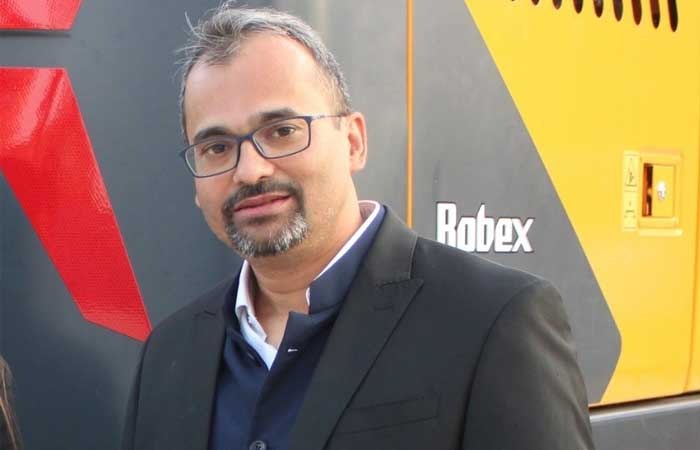
Raja Sharma, Head – Product Marketing, HD Construction Equipment India, explains how fuel efficiency, connectivity, lifecycle costs and operational flexibility are influencing excavator demand in India.
The 20–22 tonne segment continues to dominate the Indian hydraulic excavator market. What are the key factors driving the strong demand for this category?
The 20-22 tonne excavator segment continues to dominate the Indian market because it offers the ideal combination of productivity, versatility, fuel efficiency, and operating economics. These machines are widely used across highways, metro rail, irrigation, quarrying, mining support, urban infrastructure, and real estate projects due to their ability to handle diverse applications while delivering strong digging performance, faster cycle times, and optimised fuel consumption.
The segment is also benefiting from rapid infrastructure expansion, increasing mechanisation across tier-2 and tier-3 markets, and growing demand for multi-application machines capable of excavation, rock breaking, material handling, and demolition.
At HD Construction Equipment India, our 20-tonne portfolio, including the R210E, R210 SMART X PLUS, R215 SMART X PLUS, R215L SMART X PLUS, R230LM SMART X PLUS, and R245LR SMART X PLUS, has been engineered around these evolving market requirements. Designed around application-specific performance requirements, the range addresses heavy-duty use cases including general construction, rentals, quarrying, mining, canal maintenance, and material handling, while integrating optimised hydraulics, durable structures, fuel-efficient powertrains, and operator-centric ergonomics to maximise productivity, uptime, and lifecycle value.
How is customer expectation evolving in the hydraulic excavator market in India, particularly in areas such as fuel efficiency, machine uptime, lifecycle costs, telematics, and operator comfort?
Customer expectations in the Indian hydraulic excavator market have shifted significantly from upfront acquisition cost to overall ownership value and long-term productivity. Today, customers expect machines that deliver higher performance with lower fuel consumption while maintaining reliability across demanding applications. Features such as optimised hydraulics, intelligent power management, and multiple work modes are now standard requirements in the market.
Uptime has also become a key factor in purchase decisions. Contractors increasingly prefer machines supported by telematics, predictive maintenance, real-time diagnostics, and faster service response to reduce downtime and improve fleet efficiency. At the same time, operator comfort and safety are gaining greater importance as projects demand longer operating hours and the industry continues to face a shortage of skilled operators. Spacious ergonomic cabins, intuitive controls, better visibility, and lower noise and vibration levels are now essential expectations.
At Hyundai, these evolving requirements are strongly reflected in our 20-tonne SMART X PLUS and E-Series excavators. The machines are equipped with advanced electro-hydraulic systems, fuel-saving technologies, connected machine solutions, digital interfaces, and operator-focused cabin designs that help customers improve productivity, maximise uptime, and reduce lifecycle costs.
In your view, what are the most significant trends currently shaping the Indian hydraulic excavator industry, and how do you see the market evolving over the next three to five years?
Driven by the rapid Infrastructure expansion, one of the most significant trends is the increasing adoption of connected and intelligent equipment ecosystems. Technologies such as telematics, remote diagnostics, predictive maintenance, and fleet management platforms are becoming mainstream as contractors seek better visibility into machine utilisation, fuel efficiency, and operating costs.
Another major trend is the growing emphasis on fuel efficiency and lifecycle economics. Customers are no longer evaluating machines solely on upfront pricing; instead, they are prioritising lower operating costs, higher productivity, reduced downtime, and better long-term value. This is encouraging OEMs to invest heavily in advanced hydraulics, intelligent power management systems, and energy-efficient technologies.
The market is also witnessing rising demand for application-specific solutions. Contractors increasingly expect excavators to function as versatile multi-purpose platforms capable of handling excavation, rock breaking, demolition, material handling, quarrying, and utility operations through various attachments and work modes.
Over the next three to five years, the industry is expected to see deeper integration of AI-enabled diagnostics, predictive maintenance, semi-autonomous functions, and advanced machine intelligence. Digital fleet management and connected machine ecosystems will become increasingly important, especially in large infrastructure and mining projects where equipment uptime and productivity are critical.
Contractors today are increasingly looking for higher machine utilisation and operational flexibility. How are attachments, advanced hydraulics, and smart machine technologies helping excavators become multi-application machines?
Contractors today operate in an increasingly competitive environment where maximising machine utilisation and improving ROI have become critical business priorities. As a result, hydraulic excavators are rapidly evolving from conventional digging machines into highly versatile, multi-application equipment platforms capable of handling a wide range of tasks across construction, mining, quarrying, demolition, and material handling applications.
Tools such as hydraulic breakers, grapples, and quick couplers enable contractors to use a single excavator platform for multiple applications, significantly improving equipment utilisation while reducing dependency on additional specialised machines. This flexibility allows contractors to optimise fleet size, lower capital investment, and improve overall project efficiency.
Advanced hydraulic systems are equally important in supporting multi-application performance. Intelligent hydraulic management systems automatically balance engine output and hydraulic demand, ensuring higher attachment efficiency, improved cycle times, and lower fuel consumption under varying jobsite conditions.
At HD Construction Equipment India, our SMART X PLUS series is built on a customer-centric engineering approach, integrating advanced electro-hydraulic refinements, application-based work modes, and optimised hydraulic flow management to enable superior multitasking capability and smooth attachment operation across diverse jobsite requirements.
Smart machine technologies and telematics further enhance operational flexibility by allowing customers to remotely monitor machine usage, performance parameters, and maintenance schedules. Connected equipment solutions also support predictive maintenance and fleet optimisation, helping improve uptime, reduce operating costs, and strengthen overall fleet control.
This customer-focused approach reflects the industry’s shift toward intelligent, adaptable, and application-driven excavator platforms that deliver higher productivity, improved efficiency, and stronger lifecycle value.
With rising fuel costs and pressure on project profitability, how important have fuel-efficient technologies and intelligent hydraulic systems become in influencing customer buying decisions?
Fuel-efficient technologies and intelligent hydraulic systems have become among the most decisive factors influencing excavator purchasing decisions in today’s market. With rising diesel prices and increasing pressure on project profitability, contractors are placing far greater emphasis on operating economics and lifecycle efficiency than ever before.
Fuel costs account for a significant share of total operating expenses in excavation, infrastructure, quarrying, and mining operations, where machines typically run for extended working hours. As a result, customers are now evaluating equipment not only on hourly fuel consumption but also on productivity per litre of fuel consumed.
Technologies such as intelligent hydraulic flow control, optimised engine-hydraulic matching, ECO operating modes, auto-idle systems, electronically controlled pumps, and advanced power management systems are helping significantly improve fuel efficiency without compromising productivity. Even marginal improvements in fuel consumption can generate substantial savings over the machine lifecycle, particularly for high-utilisation fleets.
Advanced hydraulic systems also lead to higher operational performance under varying load conditions. Contractors increasingly recognise that advanced hydraulics play a critical role in achieving both productivity and fuel savings simultaneously.
At HD CE India, fuel efficiency has been a key focus area in the development of our latest excavator range. Machines such as the R210E are engineered around our “E” philosophy, emphasising High Fuel Efficiency, Economical Operating Cost, Enhanced Operator Comfort, and superior customer experience. Hyundai R210e features ECO mode, fuel-saving kits, optimised hydraulic systems, and intelligent power management technologies, designed specifically to help customers reduce operating costs while maintaining high productivity.
In today’s highly competitive environment, fuel efficiency is no longer viewed as a premium feature; it has become a fundamental customer expectation and a critical driver of long-term profitability.
The rental market is playing an increasingly important role in equipment deployment across India. How is the growing rental ecosystem influencing excavator design, technology adoption, and purchasing patterns?
The rental ecosystem is playing a growing role in the Indian construction equipment market, particularly across infrastructure, urban development, and short-duration projects where flexibility and cost efficiency are key. This shift is directly influencing excavator design, technology adoption, and buying behaviour.
Rental fleet owners now prioritise machines that deliver high reliability, low operating costs, easy maintenance, strong durability, and good resale value. As a result, OEMs are focusing on robust structures, simplified service access, fuel-efficient systems, and operator-friendly designs that ensure high uptime and maximum utilisation.
This need is reflected in Hyundai models like the R210E, which are engineered for rental-focused applications with an emphasis on durability, fuel efficiency, and ease of operation.
Telematics and connected machine solutions are also becoming standard in rental fleet management. Real-time data on machine location, fuel consumption, idle time, and maintenance needs helps rental companies improve asset utilisation, reduce downtime, and optimise fleet performance. This is accelerating the adoption of predictive maintenance and connected equipment technologies.
The rental market is also driving demand for versatile, multi-application excavators that can work with multiple attachments for excavation, breaking, loading, and demolition using a single machine platform. From a purchasing perspective, rental companies are shifting their evaluation criteria from initial acquisition cost toward total cost of ownership, uptime performance, fuel efficiency, service support, and long-term lifecycle value. This transition is encouraging the industry to focus more strongly on reliability, connectivity, durability, and operational economics.


Subscribe Now
Subscribe to our Newsletter & Stay updated
RECENT POSTS
Popular Tags
Folliow us
Related Stories

JCB Hydromax Sets Hydrogen Land Speed Record at 406.320 mph
British engineering major JCB has set a new world land speed record with its hydrogen-powered JCB Hydromax, achieving an average speed of 406.320...

Schaeffler India Names Amit Bhalerao as Chief Operating Officer
Schaeffler India has appointed Amit Bhalerao as Chief Operating Officer (COO), effective August 10, 2026. He will lead the company's manufacturin...
BKT to Showcase Advanced Off-Highway Tyres at Bauma ConExpo
Balkrishna Industries Ltd (BKT) will showcase its latest off-highway tyre solutions at Bauma ConExpo India 2026, scheduled from September 15-18 a...