



Schedule a Call Back
The 20-Tonne Advantage
2026-05-29
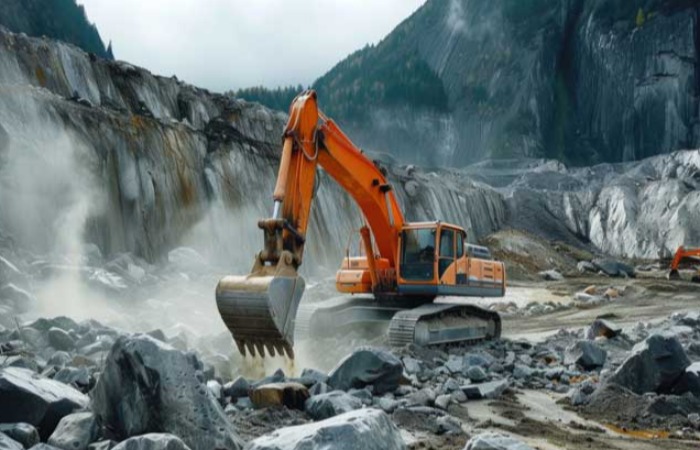
India’s infrastructure boom is reshaping the construction equipment landscape, and at the centre of this transformation stands the hydraulic excavator. From highways and metro rail networks to mining, quarrying and urban redevelopment projects, excavators continue to be among the most heavily deployed machines across the country. Within this market, the 20–22 tonne segment has established itself as the clear leader, driven by its versatility, productivity and ability to deliver attractive lifecycle economics.
As contractors increasingly focus on productivity, uptime and total cost of ownership rather than just acquisition cost, the excavator market is undergoing a significant shift. Connected technologies, intelligent hydraulics, telematics, fuel-efficient systems and multi-application capabilities are redefining customer expectations and influencing buying decisions.
The rise of the industry’s ‘workhorse’
The dominance of the 20–22 tonne category is no accident. The segment occupies a sweet spot between performance, mobility and operating cost, making it suitable for a wide range of applications.
According to Siddharth Chaturvedi, General Manager – Marketing, Tata Hitachi Construction Machinery, “The 20–22 tonne class has always been the most versatile and commercially viable category in the Indian market. This segment offers the ideal balance between productivity, mobility, fuel efficiency and operating cost.”
The segment’s appeal extends across roads, railways, irrigation projects, urban infrastructure, quarrying and mining support activities. Its compatibility with a wide variety of attachments further enhances utilisation, allowing contractors to deploy the same machine across multiple projects.
Dimitrov Krishnan, Managing Director, Volvo Construction Equipment India, echoes this view: “The 20–22 tonne excavator segment is popular in India because it offers the right balance of productivity, versatility and operating cost.”
Infrastructure spending remains the biggest demand catalyst. Massive investments in highways, metro rail projects, airports, logistics parks and mining operations continue to generate sustained demand for excavators capable of handling diverse site requirements.
PN Krishnakumar, CEO, XCMG India, points out that the segment has effectively become the industry benchmark. “Projects of this scale are predominantly specified around the 20 to 22 tonne weight class, making it the default choice for contractors bidding on public works.”
Infrastructure projects driving demand
The scale of India’s infrastructure ambitions is creating unprecedented opportunities for excavator manufacturers and contractors alike.
Major projects such as the Mumbai Coastal Road Project and the Mumbai Trans Harbour Link (MTHL) demonstrate the critical role excavators play in modern infrastructure development. These projects have relied extensively on excavators, long-reach machines and specialised attachments to tackle challenging excavation and construction tasks.
The Mumbai Coastal Road Project, for example, required advanced excavators, long-boom excavators and hydraulic breakers to manage complex coastal terrain, deep excavations and demolition activities while maintaining project schedules. Similarly, XCMG equipment contributed to the construction of the 21.8-km Mumbai Trans Harbour Link, one of India’s most significant infrastructure achievements.
Such projects highlight why contractors continue to favour machines that can deliver productivity across varied site conditions without significantly increasing ownership costs.
Customers now buy lifecycle value
One of the most significant changes in the market is the shift from upfront price considerations to lifecycle value. “Customer expectations in India have evolved significantly,” says Chaturvedi. “Today, customers evaluate machines based on total cost of ownership, reliability, operational efficiency and long-term profitability.”
Fuel efficiency has become a critical decision-making criterion. With diesel accounting for a substantial share of operating expenses, contractors are increasingly analysing cost per hour and cost per tonne rather than simply comparing machine prices.
Krishnakumar notes, “Fuel efficiency has crossed a critical threshold in India’s excavator market. It is no longer a specification talking point but a primary financial justification driving purchase decisions.”
The focus on lifecycle costs also places greater importance on uptime, service support, spare parts availability and machine durability. Contractors working on time-bound projects can no longer afford costly downtime.
As Raja Sharma, Head – Product Marketing, HD Construction Equipment India, puts it: “Contractors are placing far greater emphasis on operating economics and lifecycle efficiency than ever before.”
Connected machines become mainstream
Digitalisation is rapidly transforming fleet management practices across India. Telematics, once considered a premium feature, is now becoming a standard expectation. Fleet owners increasingly rely on connected technologies to monitor fuel consumption, utilisation, idle time, machine health and maintenance schedules.
According to Krishnan, customers are becoming more receptive to telematics technologies because they provide valuable insights into fuel usage, machine health and service requirements.
XCMG believes connected equipment has already moved beyond differentiation. “Connected equipment and telematics are completing their transition from premium features to baseline customer expectations,” says Krishnakumar.
Predictive maintenance is also gaining traction. By analysing machine data in real time, OEMs can help customers anticipate failures before they occur, improving uptime and reducing maintenance costs.
Over the next few years, the industry is expected to witness deeper integration of AI-enabled diagnostics, remote monitoring and predictive service capabilities.
From digging machines to multi-application platforms
Another major trend reshaping the market is the evolution of excavators into versatile, multi-purpose machines. Attachments such as breakers, grapples, augers, crushers, compactors, shears and quick couplers are enabling contractors to expand machine utilisation significantly.
“Contractors today want excavators that can do more than one job,” says Krishnan. Advanced hydraulic systems are making this transformation possible. Intelligent hydraulic controls automatically optimise flow and pressure according to the attachment and application, improving efficiency while reducing fuel consumption.
According to Chaturvedi, smart technologies now enable real-time monitoring, automated diagnostics, application-specific work modes and improved attachment compatibility.
For rental companies, this flexibility is particularly valuable because it allows a single machine to serve multiple customers and applications, improving asset utilisation and return on investment.
Rental market reshaping purchasing decisions
The organised equipment rental market is emerging as one of the most influential forces in the excavator industry. Rental fleet operators assess machines differently from traditional buyers. Their priorities revolve around uptime, serviceability, durability, fuel efficiency and residual value.
“Many customers would rather have access to equipment based on project length and workload than own every unit of equipment,” says Krishnan.
The growth of rentals is driving demand for standardised, versatile machines equipped with telematics and designed for easy maintenance. Rental operators increasingly depend on real-time machine tracking, utilisation monitoring and predictive maintenance capabilities to maximise fleet profitability.
This trend is also accelerating equipment penetration into tier-2 and tier-3 markets, expanding the customer base for the 20–22 tonne category.
Sustainability enters the conversation
While diesel-powered excavators will continue to dominate the Indian market in the near term, sustainability is becoming an increasingly important consideration. OEMs are investing heavily in fuel-efficient engines, intelligent hydraulic systems, emission reduction technologies and connected maintenance solutions. Electric and hybrid construction equipment is also attracting attention, although widespread adoption will depend on charging infrastructure, operating economics and project suitability.
“Electric machines will be practical and suitable where appropriate charging infrastructure is available,” says Krishnan.
For now, most manufacturers are focusing on improving efficiency and reducing emissions within conventional machine platforms while preparing for a gradual transition towards electrification.
The road ahead
The future of India’s excavator market will be defined by infrastructure growth, digitalisation, fuel efficiency and operational flexibility. The 20–22 tonne segment, with its unmatched balance of productivity and versatility, is expected to remain the backbone of the industry.
As customers increasingly evaluate equipment through the lens of lifecycle value, connected intelligence and operating efficiency, excavators are evolving from simple earthmoving machines into smart, data-driven productivity platforms.
Sharma summed up: “Customers are no longer evaluating machines solely on upfront pricing; instead, they are prioritising lower operating costs, higher productivity, reduced downtime and better long-term value.”
For India’s construction and infrastructure sectors, that shift is likely to define the next phase of excavator growth.


Subscribe Now
Subscribe to our Newsletter & Stay updated
RECENT POSTS
Popular Tags
Folliow us
Related Stories
Contractors are buying outcomes, not machines
Raja Sharma, Head – Product Marketing, HD Construction Equipment India, explains how fuel efficiency, connectivity, lifecycle costs and op...
The Fuel Revolution
For decades, diesel has been the lifeblood of India’s construction equipment industry. From highway pavers and excavators to dumpers, loaders a...
Escorts Kubota Launches NeoStar Compact Tractors
Escorts Kubota, the major agri-machinery and construction equipment, announced the introduction of Kubota Neostar, a significant upgrade to its c...