






Schedule a Call Back
India Clean Energy Push Could Create Four Point Four Million Jobs By 2030
2026-06-11
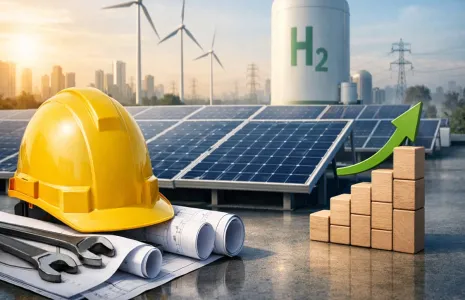 A study by the Council on Energy, Environment and Water (CEEW) and the Natural Resources Defense Council finds that India's clean energy targets, including a goal of achieving 500 GW of non-fossil fuel capacity and the national green hydrogen mission, could create about four point four million (mn) full-time equivalent (FTE) jobs by 2030. The study links most gains to distributed generation. It highlights rooftop solar as a primary source of job creation and outlines policy and skills implications for the workforce.
Between FY23 and FY26 select clean energy sectors added more than zero point six five mn workers, with rooftop solar accounting for the largest share at 62 per cent of additions. The PM-KUSUM scheme contributed 16.3 per cent of workforce additions, biomass power 12.6 per cent and ground-mounted solar six per cent. The study attributes higher employment intensity in rooftop installations to dispersed site work that requires customer outreach, site surveys, design, installation, grid connectivity and maintenance.
The report estimates about one point three mn FTE jobs may be created in operations, maintenance and manufacturing over the lifetime of projects and facilities. It notes that around 60 per cent of jobs in project deployment require highly skilled or semi-skilled workers, while 80–90 per cent of manufacturing roles demand technical skills. The study also documents gender gaps, finding women represent 11 per cent of the solar and wind workforce and account for higher shares in rooftop solar at 15 per cent, solar module manufacturing 13 per cent, floating solar 12 per cent and ground-mounted solar 11 per cent.
Government officials highlighted that people’s involvement is intrinsic to a successful green transition and noted recent capacity additions of about 51 gigawatts (GW) of solar and wind in one year as evidence of momentum. CEEW leadership argued that the energy transition must be accompanied by a workforce transition focused on livelihoods, skills and deeper domestic supply chains. The study therefore recommends policy measures to expand training, promote inclusive hiring and strengthen manufacturing linkages so benefits reach households, farmers and entrepreneurs.


Subscribe Now
Subscribe to our Newsletter & Stay updated
RECENT POSTS
Popular Tags
Folliow us