






Schedule a Call Back
PE Investments Fall 23 per cent To Rs 1.13 bn In H1 2026
2026-07-02
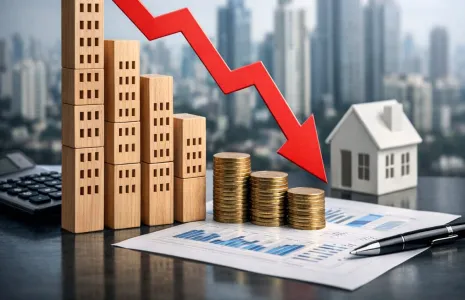 Private equity investments in the Indian real estate sector fell 23 per cent year-on-year to Rs 1.13 billion (bn) in the first half of 2026, down from Rs 1.47 bn in H1 of 2025, as investors adopted a more selective approach amid elevated global interest rates, tighter financial conditions and heightened geopolitical uncertainty. The finding appears in Knight Frank's Trends in Private Equity Investment in India: H1 2026 report.
Despite the overall decline, the office segment remained the preferred asset class, accounting for 89 per cent of private equity allocations in H1 2026, with the residential sector receiving the remainder. Private equity funding for residential projects dropped from Rs 297 million (mn) in H1 2025 to Rs 128 mn in H1 2026 as investors pivoted away from development-led opportunities towards assets offering clearer risk-adjusted returns.
The report noted that the yield gap between India's ten-year government bond and the US ten-year Treasury, which was nearly 440 basis points in 2020-21, had tightened to around 240 basis points by H1 2026. As US Treasury yields rose from approximately one point eight per cent in 2021 to roughly four point four per cent in H1 2026, investors found higher returns in developed market assets, reducing the yield advantage of emerging markets.
Residential demand fundamentals remained healthy, supported by increasing formalisation, stronger balance sheets among leading developers and sustained end-user demand across key markets, but higher financing costs and stricter return expectations restrained capital deployment. Knight Frank said moderation in private equity investment volumes reflected the evolving global capital environment rather than deterioration in fundamentals, and it identified execution certainty, taxation, liquidity and realised returns as determinants of capital allocation.
The report highlighted the resilience of India's office market, driven by expansion from Gulf Cooperation Council occupiers, robust occupier demand and a growing stock of institutional-grade assets, which continued to attract institutional capital. It concluded that India's long-term growth story remained compelling, but that winning larger pools of global capital would increasingly depend on creating a competitive investment framework that complemented strong market fundamentals.


Subscribe Now
Subscribe to our Newsletter & Stay updated
RECENT POSTS
Popular Tags
Folliow us