Eyeing New Heights
The
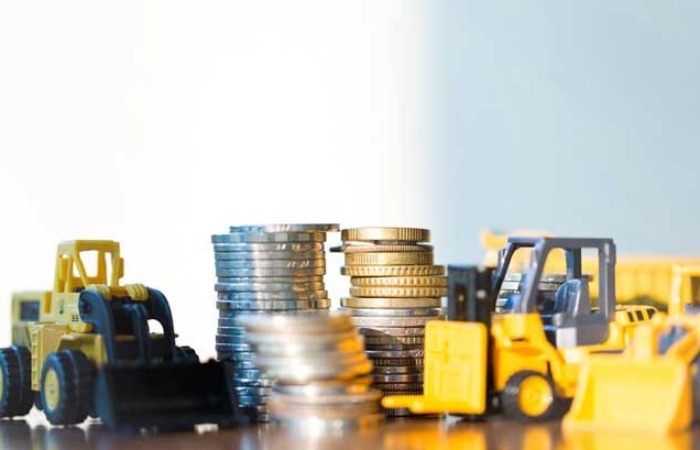
construction equipment (CE) finance industry plays a crucial role in supporting
the acquisition and use of equipment in the construction sector. It involves
the provision of financial products and serviÎs to construction companies,
contractors, and equipment dealers for the purchase, lease, or rental of CE. The
industry offers various financing options tailored to the specific needs of
construction businesses. These options include loans, leases, equipment rental
agreements, and lines of credit. Each option has its own benefits and considerations
in terms of upfront costs, ownership, flexibility, and tax implications.
The Indian
CE industry plays a vital role in fostering India's infrastructure development
and economic growth, boasting a market size of $6.5 billion. This industry serves
as a primary provider of essential heavy machinery utilised in various
infrastructure sectors, such as roads, highways, railways, ports and waterways,
aviation, real estate, and urban infrastructure. By supplying modern and
efficient equipment, the CE industry continues to support the government's
ambitious plans of constructing world-class infrastructure projects within
specified timeframes and cost-effective parameters. However, the accessibility
and availability of sufficient capital to finance both infrastructure and CE have
emerged as pressing concerns that require immediate attention. Given that CE
accounts for approximately 15 to 20 percent of infrastructure project costs,
with over 90 percent of equipment purchased on financing, addressing this issue
has become crucial.
Many
equipment manufacturers have financing programmes or partnerships with
financing institutions. These programmes can simplify the financing process for
customers, offering bundled equipment and financing solutions. They may provide
competitive rates, special promotions, or extended warranty options.

Growing
industry
Dimitrov
Krishnan, President ICEMA and Managing Director, Volvo CE India, said, “With India’s economic growth
hinging critically on infrastructure and related growth of the CE sector, it is
imperative to ensure a robust financing ecosystem in the country to meet the
growing requirements of both infrastructure and the CE industry in terms of
enhanced access to long term finance.”
Touching
upon the role of ICEMA, he added, “In view of the significance of the Indian CE
industry in facilitating and catalysing economic growth, ICEMA continuously
engages with stakeholders, including policymakers and banks and financial
institutions, to engender consensus on critical issues, devise innovative
solutions and create an enabling financing environment for our industry.”
On the
subject of financing avenues and options for infrastructure projects and the CE
industry in the coming times, Ashok Sharma, Chief General Manager, State
Bank of India (SBI), explained, “There is no shortage of funds in the
Indian banking sector. We are capable of long-term financing of infrastructure
projects on competitive terms as compared to both the private sector and
foreign investors.”
OEMs
tie-up with banks
Recently, Federal
Bank has tied up with JCB India to finance the prospective buyers of heavy CE and
boost its loan portfolio. The arrangement will boost financing options for JCB
customers in India.
With the
government's focus on infrastructure development continuing to remain strong,
there will be various opportunities to create synergies between the teams from
JCB India and Federal Bank, Deepak Shetty, CEO and Managing Director of JCB
India, said. He added, "Importantly, it will give greater financing
options to our customers while purchasing JCB machines both in urban and rural
India," he added.
Shyam
Srinivasan, Managing Director and CEO of Federal Bank, said “This partnership
would prove to be hugely beneficial to a segment of customers who are looking
for easy finance options to take their business forward. We are confident this
association will help remove barriers between Bharat and Atmanirbhar Bharat.”
With an
aim to make equipment financing an easy, efficient, and simple process, Sany
Bharat has signed an MoU with Union Bank of India. As per the agreement, the
network of Union Bank will extend equipment finance to customers of Sany Bharat
across the country and in turn the Bank’s portfolio under equipment finance is
likely to strengthen and get a wider reach.
While both
the parties have agreed to pool their resources and capabilities for mutual
benefits, buyers of Sany equipment can now avail a loan of up to 90 per cent of
the equipment cost. The flexible payment options offered by the bank will
facilitate Sany customers to manage cash flow and help in loan repayment. The widespread
presence of Union Bank is expected to facilitate Sany’s customer’s pan India
and thereby fortify infrastructure growth which is significant towards creating
a Naya Bharat.
Dheeraj
Panda, COO (Sales, Marketing and Customer Support), Sany Heavy Industry India, said, “By enhancing their focus on the
MSME sector, union bank of India has eased the financial burden for our
existing and potential customers. By joining hands with Union Bank of India,
interest rates will no longer prevent our buyers from becoming a proud owners
of Sany equipment.”
Schwing
Stetter too signed an MoU with Karnataka Bank to provide loans at competitive
interest rates for buying CE. Mahabaleshwara MS, ex-Managing Director and
Chief Executive Officer, Karnataka Bank, said: “In keeping with our focus
on credit expansion, the bank is at the forefront of funding MSMEs (micro, small
and medium enterprises). We are delighted to have signed an agreement with
SCHWING Stetter, who share similar principles of excellence, integrity, and
long-term development. Our bank offers numerous financing solutions for the
acquisition of equipment, with competitive rates of interest and quick loan
approvals through digital platforms.”
“With huge
investments in infrastructure, we hope our association with Karnataka Bank will
help the bank’s customers easily acquire machines built with the best technology,
in a state-of-the-art manufacturing facility with futuristic and digitalised
solutions for the construction industry,” said VG Sakthikumar, Managing
Director of Schwing Stetter India.
Even,
IndusInd Bank entered into a $100 million long-term loan agreement with JBIC to
facilitate Indian entities interested in buying Japanese CE. The finance is
being done through a special agreement signed with Japan Bank for International
Cooperation (JBIC) by the lender’s branch in the Gift City. The lender has
entered into a $100 million long-term loan agreement with JBIC and the funds
thus raised will be used by IndusInd Bank to foster the growth of Japanese CE companies
in India through need-based credit facilities
Japan’s
Mizuho Bank, Shizuoka Bank, Singapore, and Joyo Bank of Japan will also
co-finance in this facility. IndusInd Bank will provide credit facilities to
companies that comprise the supply chain of the Japanese original equipment
manufacturers (OEMs) in India. The programme will cover the component suppliers
and dealers of the selected Japanese OEMs and the final buyers of the
construction machinery manufactured by those companies, it specified.
Rising
rental market
Equipment
rental is a cost-effective alternative to purchasing, and it provides access to
a wide range of machinery and equipment needed for their operations. Over the
last decade, the rental industry landscape has seen many dynamic shifts, both
in terms of technology as well as innovation. While the construction and mining
industry would use more diesel engine-driven equipment traditionally, electric
machines have now started taking the spotlight and we have designed products
with sustainability in mind.
Conclusively,
India has nearly $2300 million worth of CE sold every year, out of which 7 to 8
per cent is sold to rental companies. The current scenario allows focus on
regional areas for construction, giving the rental business an organised way of
working and is expected to grow year on year in days to come in India.
Said Satin
Sachdeva, Founder & Secretary General, Construction Equipment Rental
Association (CERA), “The demand for infrastructure development has been a
major driver of the growth of the equipment rental market. Companies in the
construction and engineering industries are turning to equipment rental
services for their cost-effectiveness, access to the latest equipment, reduced
maintenance costs, and increased productivity, it is likely that the demand for
equipment rental services will continue to grow in the coming years. In the
past five to six years, rental penetration has grown multi-fold and is now close
to over 40 per cent which was merely five to ten per cent six years back. We
have played a vital role in increasing penetration with the right awareness and
advocacy.”
Mukesh
Sharma, Country Manager, Atlas Copco Specialty Rental, said “Atlas Copco Specialty Rental
has also played an instrumental role in bringing a mind shift for clients.
Earlier, the rental would be limited to leasing out machines and equipment. We
have invested heavily in technology and manpower to turn this supply-demand
transaction into a solution-based approach.”
Sameer
Malhotra, CEO, Shriram Automall,
thinks that the requirement of heavy capital for starting a rental business of CE
pushes the owners to look for used CE. He added, “However, the sales of new
machines will also see a boom thanks to the Government’s efforts towards
infrastructure development. Speaking about new construction machines, a fleet
of diesel machines would require lower initial capital than electric
construction machines. The availability of equipment running on alternate fuels
will help rental businesses to diversify their fleet and reduce net carbon
emissions. The CE market is expanding annually and so is the used CE market. At
present, for every sale of a new construction machine, a used construction
machine is sold depicting the size of the pre-owned market. The pre-owned
market is expected to grow steadily in the future because used CE provides far
greater value when compared to new equipment. Hence, rental business owners of CE
are more likely to buy used diesel machines instead of new ones.”
Challenges
The CE
industry’s access to finance is frequently hampered by the fact that lending
processes in the country are often stringent, tedious, and time-consuming. CE,
especially heavy machinery, involves significant capital investment. Acquiring
these expensive assets requires substantial financial resources, which can be
challenging for small and medium-sized businesses or new entrants in the
industry.
Lenders
often require collateral for CE loans, which can pose challenges for companies,
especially those with limited assets to offer as security. This requirement may
further limit access to financing options, particularly for small businesses.
Road
ahead
Addressing
these challenges requires collaboration between financial institutions,
industry stakeholders, and government entities. Encouraging policies that
promote access to affordable financing, supporting innovation in financial
products, and providing assistance to small businesses can help overcome these
hurdles and facilitate CE financing.
The CE
financing industry and CE OEMs, who have, in the past, collaborated to enhance
access to finance with several disruptive innovations, are now gearing up to go
the digitalisation route to bring about the much-needed paradigm shift in the
industry’s financing ecosystem.