




Schedule a Call Back
Vertical Moves
2026-05-28
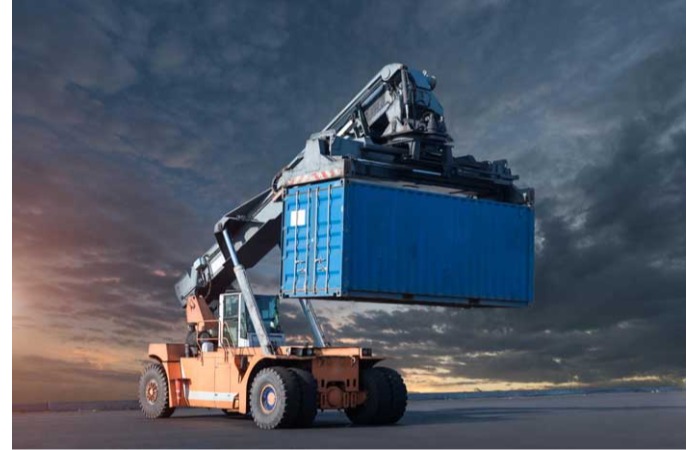
Material handling plays a critical role in tall building construction, helping to adhere to timelines and enabling safe, efficient operations. When building tall, limited space and vertical movement challenges make it essential to plan logistics comprehensively, factoring in crane reach, lift placement and material flow.
Traditionally, developers rely on tower cranes, material hoists and self-climbing platforms to manage vertical transport, while designated laydown zones and prefabricated components help reduce onsite movement, according to Sudharshan KR, Chief Projects Officer, Mahindra Lifespace Developers.
Cranes & forklifts
For projects that are above 15 floors going up to 28 floors, as in Auriga, Concorde uses tower cranes, both external and self-climbing mast cranes, to lift heavy loads like steel, aluminium shuttering material, etc, shares Anil RG, Managing Director.
At Kalyani Developers’ flagship residential project LivingTree in Bagalur, spanning more than 2,500 units across multiple towers, tower cranes have been deployed to handle steel and aluminium formwork. “The formwork is customised to full apartment scale, with transfer cutouts designed at every slab level to ensure seamless vertical movement during shuttering and reinforcement activities,” says A Mohan Raju, MD & CEO, Kalyani Developers.
“The scale of today’s infrastructure and industrial projects demands cranes with enhanced load-bearing capabilities, greater manoeuvrability and advanced technological features,” says Arvind Rishi, AVP – Sales & After Market, TIL Limited. “The crane market is no longer just about lifting capacity but about providing comprehensive engineering solutions that enhance operational efficiency and safety.”
Concorde uses forklifts to lift and transport heavy materials and pallets. At Mahindra Lifespace Developers’ Kalyan site, forklifts efficiently lift palletised tile boxes and bulk materials to address labour shortages. Palletisation helps shift materials.
Concorde uses separate material hoists and passenger hoists to transport workers and materials vertically. At Kalyani Developers’ LivingTree, material hoists are used to transport finishing materials like tiles, electrical conduits, plumbing material and paints efficiently across all floors.
Beyond conventional cranes and forklifts, material handling inside warehouses and staging areas is evolving with the adoption of innovative intralogistics solutions. “At Jungheinrich, we offer a comprehensive range of material handling equipment (MHE) that includes electric pallet stackers, reach trucks, very narrow aisle (VNA) trucks, order pickers, and automated guided vehicles (AGVs), all designed for seamless warehouse operations,” says Manojit Acharya, Managing Director India, Jungheinrich AG. “Our electric pallet stackers deliver high residual capacity even at maximum lift height, while our reach trucks offer unmatched compactness and lift heights of up to 14 meters, making them highly efficient in constrained spaces.”
Equipment maintenance
Periodic inspections of tower cranes and hoists, including the condition of the rope, load tests and hydraulic overhauling are vital, says Raju. He recommends using only certified lifting and handling equipment and getting a certified third-party to calibrate machinery for operational precision and compliance.
According to Rishi, safety has become a paramount focus in crane operations, with modern equipment incorporating overload limiters, load moment indicators (LMI), telematics and advanced interlocks to prevent overloading and improve operational control.
Concorde practices the regular maintenance of material handling equipment through various checklists and work permits from its safety team, according to Anil.
Operator management
Recruit experienced personnel to handle equipment and to train workers on equipment usage and safety protocols, Anil adds. Periodically conducted operator training helps to ensure compliance with the latest safety protocols, agrees Raju. Further, managing operators by shifts ensures well-rested operators. Shifts should be no longer than eight hours. He also recommends regular toolbox talks for labour teams to reinforce site discipline and safe practices.
Just-in-time delivery
Just-in-time delivery brings materials onsite when needed, effectively reducing onsite crowding and reduced potential wait time, shares Nimish Ajmera, Director and Head of Design and Architecture, Ajmera Realty & Infra India, based on his experience of constructing Ajmera Manhattan.
Not only does just-in-time delivery avoid onsite clutter, it also helps optimise the utilisation of available storage, adds Sudharshan. “Tools like BIM and scheduling software are key to coordinating deliveries and just-in-time material management, further optimising equipment use.”
Best practices
Accurate forecasts and schedules underlie just-in-time delivery. Accurately forecasting the requirement of materials helps avoid under-stocking and over-stocking. Close coordination with suppliers ensures timely deliveries. Scheduling deliveries in advance avoids delays as well as pileups. Scheduling night deliveries avoids disruptions and ensures timely material arrivals. One can stagger construction so that the space can be utilised to stack materials.
Digital technologies are increasingly transforming material handling and lifting operations in high-rise construction. “IoT integration, data analytics and advanced control systems are significantly enhancing crane performance and efficiency,” says Rishi. He adds that integrated telematics and CAN-based control systems enable real-time monitoring, predictive maintenance and smoother load handling, helping improve productivity while reducing equipment downtime.
Storage spaces
At Mahindra Lifespace Developers, efficient material handling in tall buildings is achieved by designating storage spaces on interim floors, reducing time and effort on lead and lifts, says Sudharshan.
For the safety of everyone onsite, strict adherence to safe storage practices is necessary. At Concorde, safety and project heads conduct regular audits with respect to material storage and handling practices to prevent accidents, says Anil. “Meticulous planning ensures the proper utilisation of equipment for shifting materials. The elaborate use of CCTV and allotment of security at critical locations helps ensure the safety of material onsite. Using a container as a store helps in quick and safe shifting, if required at a later stage. Storing material on a podium-like structure designed to take loads helps.”
Earmark clearly designated storage zones within the site for different material categories, recommends Raju. He endorses the adoption of scalable systems that uphold the highest safety and quality standards throughout the project lifecycle.
Material options
Instead of opting for traditionally used heavier materials, Ajmera proposes shifting to lighter, tech-friendly options that assist the crane/hoist. “Mivan shuttering, for example, eliminates the need for [heavier] timber formwork, speeding up work and reducing lifting requirements. Besides, window frames are built more efficiently, integrated right into the concrete with Mivan shuttering for better alignment and waterproofing.”
In tiling, using dry screed allows work to progress sooner, offering more flexibility in material
deliveries when crane use is limited, adds Ajmera. “Reinforcement should be cleverly managed too – ordering steel in precut shapes minimises waste and leads to a tidier jobsite and when using couplers instead of overlapping bars, you lift a considerably smaller amount of steel.”
He suggests eliminating curing by water and using chemicals instead to save space and energy, and avoiding the creation of pools of stagnant water which invite mosquitoes (and, possibly, fines). “Using materials like PU or epoxy for staircases avoids the need for heavy stone or cement, again reducing the transport load.”
Site protection
Installing external safety barriers around the periphery of all towers prevents hazards during construction. Additionally, Sudharshan recommends mapping efficient site logistics around buildings to ensure smooth vehicle movement and the seamless transportation of goods.
“Ensuring safety through trained teams, proper rigging and protective measures, along with close supplier coordination, RFID tracking and multi-level loading bays, helps us ensure timely and accurate material delivery on every project.”
Sustainability and customisation are also emerging as key trends in the material handling and crane segment. Manufacturers are increasingly focusing on energy-efficient equipment and tailored lifting solutions that can operate effectively in confined urban construction sites while meeting evolving safety and operational requirements, notes Rishi.
Handling materials gets more complex with vertical construction. But, evidently, investing in precise logistics can serve as a critical project differentiator.


Subscribe Now
Subscribe to our Newsletter & Stay updated
RECENT POSTS
Popular Tags
Folliow us
Related Stories
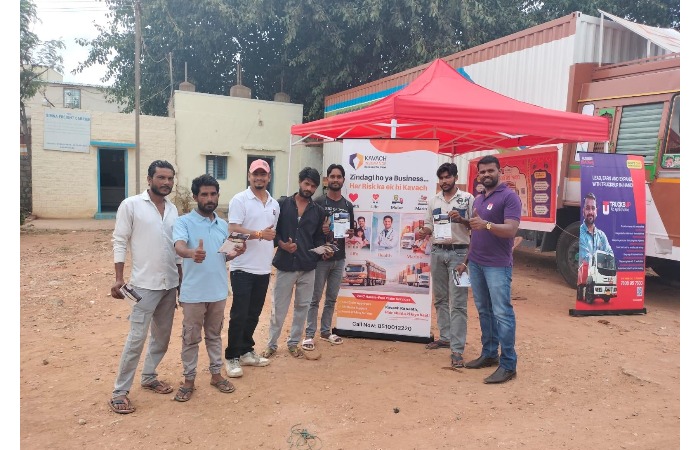
TrucksUp Celebrates Truck Drivers’ Role in India’s Growth
TrucksUp has celebrated July 19 as TrucksUp Drivers’ Day with a special appreciation initiative across its network, recognising the contributio...

GS Caltex India Refreshes Kixx Brand Identity in India
GS Caltex India has unveiled the refreshed global identity of its flagship lubricant brand, Kixx, in India, marking a new phase in the brand’s ...

Smiley Monroe Invests Rs 6 Crore in Hosur Facility Expansion
Smiley Monroe has expanded its India operations with a new 24,000 sq ft manufacturing facility in Hosur, Tamil Nadu, backed by an investment of R...