






Schedule a Call Back
The Risk of Negative Bids
2026-06-29

The phenomenon of negative bidding in India's roads sector has moved from being an occasional occurrence to an industry-wide concern. With contractors increasingly quoting significantly below project estimates to secure orders, questions are being raised over project viability, execution quality and the long-term sustainability of the contracting ecosystem.
These concerns formed the core of a high-level industry roundtable organised by CW, where senior industry leaders deliberated on the reasons behind the trend, its implications and the reforms needed to restore discipline and sustainability in road contracting.
Setting the context for the discussion, moderator Devayan Dey, Partner - Infrastructure, Transport & Logistics, PwC India, highlighted the scale of the issue. According to him, the median L1 quote for EPC projects in FY26 stands at around minus 35 per cent, while HAM projects are witnessing median discounts of nearly minus 20 per cent, underscoring that negative bidding has become an industry-wide phenomenon.
Market crowding amid fewer projects
One of the strongest themes emerging from the discussion was the widening imbalance between the number of contractors and the volume of projects available for bidding.
According to panellists, while the roads sector witnessed substantial capacity creation over the past two decades, project awards have moderated in recent years. At the same time, the relaxation of techno-financial qualification criteria during and after the pandemic significantly expanded the pool of eligible bidders.
“Nearly 90 per cent of projects today are being awarded at discounted rates,” observed Keshab Charan Das, General Manager (BD - Estimation & Costing), GR Infraprojects. He noted that while project flows have declined from earlier levels, the market has become increasingly crowded, forcing contractors to quote aggressively merely to sustain operations and maintain their presence in the market.
Talluri Raghupati Rao, Whole-Time Director, PNC Infratech, pointed out that the easing of qualification norms had lowered entry barriers considerably. Requirements relating to technical capacity, similar work experience, net worth and turnover were diluted during the pandemic to encourage participation. However, as project awards slowed, competition intensified, leading to steep discounting.
For many contractors, maintaining equipment utilisation, retaining skilled manpower and ensuring cash-flow continuity have become key drivers behind such bids.
Is the DPR process contributing to the problem?
The quality of Detailed Project Reports (DPRs) and the relevance of Schedule of Rates (SORs) also came under scrutiny. Das highlighted significant discrepancies between DPR assumptions and ground realities. According to him, consultants often continue to rely on outdated SORs that do not accurately reflect prevailing market conditions, local royalty structures or material availability in specific geographies.
Examples were cited where royalty notifications had remained unchanged for years despite significant increases in local premiums and market rates, creating uncertainty and encouraging speculative bidding.
Sanjay K Nirmal, Former Director General, Ministry of Road Transport and Highways, acknowledged that DPR quality remains an issue but emphasised that it is not the sole reason for negative bidding. He observed that many value engineering measures eventually adopted by contractors could potentially be incorporated at the DPR stage itself, resulting in more realistic project estimates. Greater due diligence by both consultants and authorities during project preparation, he said, could help improve estimate accuracy.
At the same time, panellists noted that the flexibility available under EPC contracts enables contractors to optimise designs and reduce costs through engineering innovations. However, distinguishing genuine optimisation from cost cutting remains a challenge.
Competition vs. sustainability
The discussion also highlighted concerns regarding the sustainability of excessively aggressive bids. Rao remarked that while certain efficiencies can be achieved through design optimisation, equipment ownership advantages and lower financing costs, there are limits to cost reduction.
“Civil engineering is not rocket science,” he said, adding that beyond a point, further cost compression inevitably results in compromises.
Established contractors often execute critical activities departmentally and invest significantly in quality systems because they remain responsible for long-term asset performance. Smaller players, however, may depend extensively on subcontracting and operate with lower overhead structures.
Nirmal pointed out that increased subcontracting has emerged as another significant trend. According to him, projects secured at heavily discounted rates are frequently passed on to subcontractors at even lower prices, creating concerns regarding quality assurance and execution capability.
While not every negative bid necessarily results in project failure, panellists agreed that excessively aggressive bidding increases execution risks and can adversely impact contractor health. Dey cautioned against drawing a direct correlation between negative bidding and project failure, noting that available data presents a mixed picture. The larger challenge, he said, lies in distinguishing genuine innovation and cost optimisation from unsustainable pricing strategies.
Project readiness remains a critical challenge
Despite improvements in project preparation processes, land acquisition continues to pose a major challenge.
Rao observed that even though projects are now expected to achieve a high degree of readiness before award, delays in land acquisition and possession continue to affect timely commencement and completion.
He emphasised that successful project execution depends not merely on land acquisition notifications but on the availability of encumbrance-free and peacefully handed-over land.
While inadequate project readiness can affect contractor cash flows and execution schedules, panellists did not consider it a primary driver of negative bidding.
Rethinking procurement
The panel extensively deliberated on possible reforms to address the growing challenge.
One proposal that received broad support was the introduction of stricter scrutiny for abnormally low bids. International procurement practices, panellists noted, often subject such bids to detailed evaluation and, in some cases, rejection.
Das suggested that bids exceeding a certain discount threshold should undergo rigorous scrutiny, including examination of pricing assumptions and execution strategies.
Another recommendation was the introduction of a contractor rating system, which panellists viewed as a critical reform to encourage long-term performance and discourage opportunistic bidding.
A robust rating mechanism linked to timely delivery, quality performance and maintenance outcomes could help distinguish serious contractors from speculative bidders.
Panellists also stressed the need for greater accountability among DPR consultants, recommending that consultants remain associated with projects until completion.
RK Pandey, Independent Director, Vertis; Former ADG, MoRTH; and Former Member, NHAI, argued that the sector must increasingly adopt a whole-life cost approach rather than focusing solely on upfront construction costs. Such an approach, he said, would encourage better engineering, improve asset quality and create a more sustainable contracting environment.
Summarising the discussion, Dey noted that stronger scrutiny of bids, particularly those quoting significantly below estimates, along with a long-term contractor rating mechanism, could help bring greater discipline to the sector. Such measures, he said, would encourage sustained performance rather than short-term pricing strategies.
The road ahead
The consensus emerging from the discussion was clear: Negative bidding is not merely a pricing issue but a reflection of broader structural challenges within the sector.
While enhanced competition, engineering innovation and improved financial sophistication have contributed positively to the industry's evolution, excessive undercutting threatens to undermine quality, execution discipline and long-term sustainability.
As India's highways programme continues to expand, stakeholders believe that reforms in procurement practices, contractor evaluation, DPR preparation and lifecycle-based decision-making will be essential to ensure that competitiveness does not come at the cost of quality.
Dey concluded that while competition and innovation are essential for improving efficiency, the industry must ensure that aggressive pricing does not undermine quality, contractor health and long-term asset performance.
-KAVITA PARAB
(The views expressed above were shared by panellists during CW's webinar, “Why Are Roads Receiving Negative Bids?” held on June 15, 2026.)
What Needs to Change
• Negative bidding is now the sector norm.
• Competition is outpacing project availability.
• DPR gaps are distorting bid estimates.
• Aggressive pricing threatens sustainability.
• Quality risks rise with deep discounting.
• Bid scrutiny mechanisms need strengthening.
• Contractor ratings can improve accountability.
• Lifecycle costing should replace L1 focus.


Subscribe Now
Subscribe to our Newsletter & Stay updated
RECENT POSTS
Popular Tags
Folliow us
Related Stories
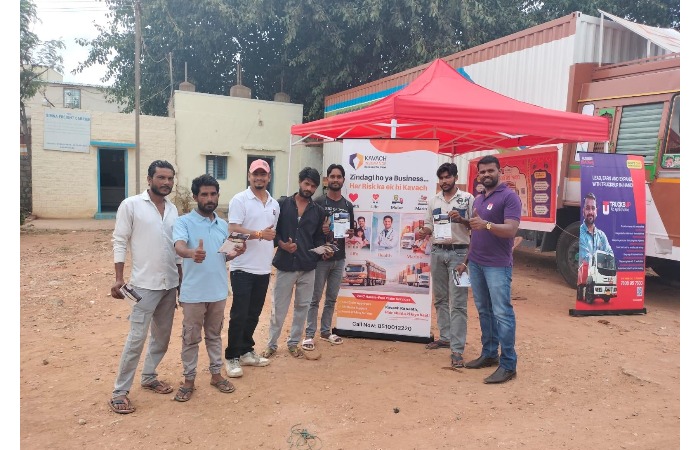
TrucksUp Celebrates Truck Drivers’ Role in India’s Growth
TrucksUp has celebrated July 19 as TrucksUp Drivers’ Day with a special appreciation initiative across its network, recognising the contributio...

GS Caltex India Refreshes Kixx Brand Identity in India
GS Caltex India has unveiled the refreshed global identity of its flagship lubricant brand, Kixx, in India, marking a new phase in the brand’s ...

Smiley Monroe Invests Rs 6 Crore in Hosur Facility Expansion
Smiley Monroe has expanded its India operations with a new 24,000 sq ft manufacturing facility in Hosur, Tamil Nadu, backed by an investment of R...