





Schedule a Call Back
India And Australia Deepen Ties On Nuclear Maritime And Minerals
2026-07-13
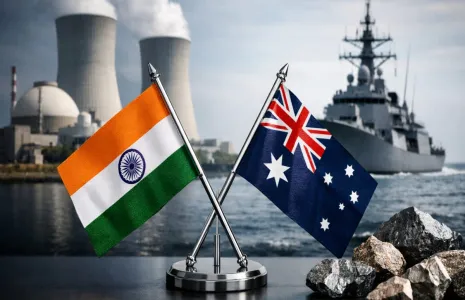 India and Australia sealed landmark pacts spanning civil nuclear energy, maritime security and critical minerals as Prime Minister Narendra Modi and his Australian counterpart Anthony Albanese reinforced the role of the bilateral partnership in ensuring a peaceful Indo-Pacific. Modi landed in Australia from Indonesia in the second leg of his three-nation tour aimed at boosting trade and defence ties amid a fractured geopolitical environment.
After meeting, the leaders unveiled a joint declaration on defence and security, a joint statement on energy ties and a roadmap for collaboration in cyber, critical technologies and supply chains. The pact on civil nuclear energy will facilitate the commercial supply of uranium from Australia to India to help New Delhi's nuclear power projects. The two sides agreed to work expeditiously on the proposed Comprehensive Economic Cooperation Agreement and a bilateral investment protection pact.
Modi indicated the agreement would open the way for uranium supplies and give new impetus to clean energy objectives and described cooperation in critical minerals as vital to strategic security and the clean energy transition. He said the launch of the Australia-India Partnership on Cyber, Critical Technologies and Supply Chains was intended to support this aim and that both sides will develop a critical minerals corridor. He added the India-Australia Defence Innovation Corridor will seek to connect defence startups and industry while the Maritime Security Collaboration Roadmap will advance shipbuilding, repair and maintenance cooperation.
Modi said terrorism is a shared challenge and both countries would strengthen cooperation to combat it, promote dialogue and diplomacy to resolve tensions and preserve freedom of navigation and a rules-based Indo-Pacific order. The defence initiatives were framed against concerns about China's growing military activity in the region. Albanese described the relationship as more consequential than ever and said the nuclear arrangement would facilitate Australian uranium exports for peaceful purposes, increasing non-fossil fuel power capacity and supporting the Australian resources sector.
He emphasised the partnership was diversifying across defence, security, education, science, technology, energy security and critical minerals and that the joint declaration would deepen practical cooperation, strategic coordination, more complex exercises and interoperability between forces. Both leaders signalled intent to expand bilateral ties and to grow the partnership from strength to strength.


Subscribe Now
Subscribe to our Newsletter & Stay updated
RECENT POSTS
Popular Tags
Folliow us